We had the church Christmas musical program last night. In the adult choir, there are entirely white people, and they all have names that are Dutch, Swedish, German, and English. The children's choir is more mixed, with (at least) Sudanese, Chinese, Guatemalan, Korean, and Eastern European children - though many of their names are northern European* - in addition to the expected pale, light-haired descendants.
Well, it makes for incredible cuteness, of course, and distracting as that is, it does have value.
In our previous church, about one-third of the children were foreign adoptees, and though the percentage here is less than one-quarter, the trend is clear. My data is likely greatly skewed, both by the Christians I know and the adoptees (and refugees) I know, but it seems that evangelicals are much more likely to have foreign-born children than even other Christian groups, and well more than more secular folks.
*It's going to be a hoot in another generation when all those Pastors Cedarstrom and Van Der Beken were actually born in the C.A.R. or China - an outcome the original Covenanters would doubtless have laughed happily at.
Monday, December 13, 2010


Counterintuitive
Much economic discussion these days revolves around how contradictory and impossible the major premise of the opponent's program is. The left complains that it is simply insane to think you can cut taxes and get more revenue. It just seems backwards. If you want more money, charge more. The right complains that the Keynesian approach seems equally insane on the face of it. Why should the government spend more money in a downturn, when the people have less?
Both sides have their reply, based on their assumptions. Reduced taxes means more money out doing productive things in the economy, like creating jobs, which eventually creates more people working, making money, and paying into the system. Or from Keynes, the system needs a certain amount of fluid in it to operate properly. If the fluid isn't coming in naturally, the government has to top off the fluid by injecting money into it.
I leave off for the present the argument about which works better. I note that there is a similarity in that both teach that money flowing around rather than sitting idle is a good thing, but they differ as to where the money comes from. What strikes me at the moment, however, is the inability of either side to acknowledge that yes, it does seem counterintuitive, doesn't it? Perhaps in these times of bitterness, such an admission would seem too great a risk. Much better to simply pound home the idea of how ridiculous the other guy's idea sounds. Yet I can't help but think we might move forward if we could start from the realisation that both positions can be oversimplified and made to sound insane.
Both sides have their reply, based on their assumptions. Reduced taxes means more money out doing productive things in the economy, like creating jobs, which eventually creates more people working, making money, and paying into the system. Or from Keynes, the system needs a certain amount of fluid in it to operate properly. If the fluid isn't coming in naturally, the government has to top off the fluid by injecting money into it.
I leave off for the present the argument about which works better. I note that there is a similarity in that both teach that money flowing around rather than sitting idle is a good thing, but they differ as to where the money comes from. What strikes me at the moment, however, is the inability of either side to acknowledge that yes, it does seem counterintuitive, doesn't it? Perhaps in these times of bitterness, such an admission would seem too great a risk. Much better to simply pound home the idea of how ridiculous the other guy's idea sounds. Yet I can't help but think we might move forward if we could start from the realisation that both positions can be oversimplified and made to sound insane.
Matthew 6:33-34
Apropos a discussion at First Things today, reacting to a flyer from the UU church.
It is an odd sort of seeking that allows no finding.
Crawford, Martinez, and More Statistics
My son Ben had a good reply to my initial baseball statistics post, but there is more to be said. Boswell's column is certainly part of it. The corrective I would add to Boswell is that the short left field, while it inhibits what Crawford can do for you catching the ball, also disguises his below-average throwing. Perhaps Carl can play shallow and channel his speed left to right, shutting down more space. Perhaps he will develop mastery of The Green Monster. Perhaps.
I was prepared to concede Ben's point about Martinez, as I had simply forgotten about his poor percentage of base-stealers thrown out. It was indeed maddening to watch at times last year. But...Martinez had 27 out of 126 caught stealing. So 99-(27x2.6) = 29 bases, which equals 2.9 runs for the season. Call it 3 runs. Not so much. It is indeed discouraging while it is happening, but like base-stealing itself, there's more drama than effect.
It does bring up the issue whether pitchers did worse when Martinez was catching. Nope. They had an ERA slightly over 4 with Martinez, and slightly over 4 with Varitek. Martinez's numbers were improved by Buchholz, but he also caught a lot of games by Beckett, which dragged him down (and he caught him much better than Varitek). At least publicly, the other pitchers have had praise for him as well. If there was a pitcher's conspiracy to get him out because he was screwing them up, it's well hidden. Not that he couldn't be screwing them up and they not realise it, but that becomes a less likely possibility.
I think it is fair to also concede that even if Martinez's catching days are not over, they are at least numbered. He is a DH, and perhaps a declining one, so mixing him in with Ortiz, backup catching, and whatever-you-got for a year means he's a year older when he becomes your full-time DH, and he's likely insulted to boot. Still, OPS of .844 to Crawford's .851. Essentially the same at half the price. And that's not even figuring in Jason Bay, who is the real comparison to Crawford. Martinez was an extra. And the Yankees are also pursuing Russell Martin.
Fans and GM's like to have good players locked in for multiyear deals. It means fewer problems to solve each year and builds fan loyalty. But "locked in" has two meanings. Things change.
As I said, I generally like what we've got - plus rumors of Ordonez and Beltran, and relievers Downs and Fuentes. It's a good team and it should do well if healthy. But an injury here or there, or Bay bouncing back from his injuries would only highlight what could have been if they had decided to spend that kind of money a year ago.
I was prepared to concede Ben's point about Martinez, as I had simply forgotten about his poor percentage of base-stealers thrown out. It was indeed maddening to watch at times last year. But...Martinez had 27 out of 126 caught stealing. So 99-(27x2.6) = 29 bases, which equals 2.9 runs for the season. Call it 3 runs. Not so much. It is indeed discouraging while it is happening, but like base-stealing itself, there's more drama than effect.
It does bring up the issue whether pitchers did worse when Martinez was catching. Nope. They had an ERA slightly over 4 with Martinez, and slightly over 4 with Varitek. Martinez's numbers were improved by Buchholz, but he also caught a lot of games by Beckett, which dragged him down (and he caught him much better than Varitek). At least publicly, the other pitchers have had praise for him as well. If there was a pitcher's conspiracy to get him out because he was screwing them up, it's well hidden. Not that he couldn't be screwing them up and they not realise it, but that becomes a less likely possibility.
I think it is fair to also concede that even if Martinez's catching days are not over, they are at least numbered. He is a DH, and perhaps a declining one, so mixing him in with Ortiz, backup catching, and whatever-you-got for a year means he's a year older when he becomes your full-time DH, and he's likely insulted to boot. Still, OPS of .844 to Crawford's .851. Essentially the same at half the price. And that's not even figuring in Jason Bay, who is the real comparison to Crawford. Martinez was an extra. And the Yankees are also pursuing Russell Martin.
Fans and GM's like to have good players locked in for multiyear deals. It means fewer problems to solve each year and builds fan loyalty. But "locked in" has two meanings. Things change.
As I said, I generally like what we've got - plus rumors of Ordonez and Beltran, and relievers Downs and Fuentes. It's a good team and it should do well if healthy. But an injury here or there, or Bay bouncing back from his injuries would only highlight what could have been if they had decided to spend that kind of money a year ago.
Saturday, December 11, 2010
Romanian Carol
I don't have either Romanian here, so I can't tell you a thing about it, except that it is from NE Romania, in Bucovina, one of the remoter, more rural areas of the country.
Listen a few times and you will find yourself humming it.
Listen a few times and you will find yourself humming it.
More Crawford
No Oil For Pacifists sends me the link: Tom Boswell agrees with me about Crawford, and more. Best line:
I promise to get back to non-sports posting later today, after laundry, painting, moving stuff, and maybe shopping.
Didn't the Yanks help the Red Sox out enough already by re-signing their utterly immobile captain for three more years? Derek Jeter, a handsome marble column of a shortstop, has finally gone from "iconic" to "Ionic."Ugly stats in more detail than I provided.
I promise to get back to non-sports posting later today, after laundry, painting, moving stuff, and maybe shopping.
Thursday, December 09, 2010
More Sports
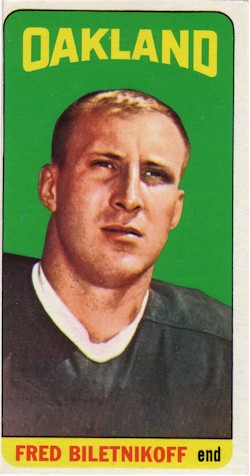
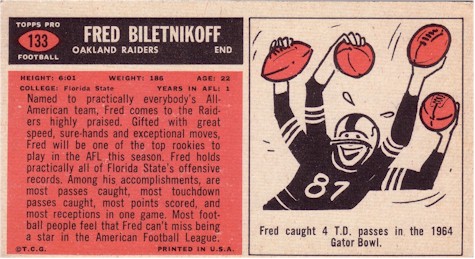
If I knew it, I had forgotten that college football's top receiver award is called the Biletnikoff award, after Fred Biletnikoff. This warms my heart.


AVI's Baseball Statistics
If you replace a shortstop batting 7th with 70 runs created (or whatever batting stat you favor) with a shortstop batting 7th with 90 runs created, those 20 runs are exactly the same amount of improvement as getting a 20-run improvement in the 3 spot, say from 120 to 140. The guy in the 3-spot will get lots of attention, have some visible game winning hits, and make everyone feel like they've got a big stud winning team. But those guys down the order are just as important in the overall.
Which is obvious, when you think of it. AVI stuff. Similarly, those guys lower in the order can kill you if they don't hit well. We think of a .700 OPS as unexciting and a .650 OPS as unexciting, and consider them equal. They aren't. That .650 costs you. Put a couple of guys like that late in the order, and you have a fan base wondering why the team isn't winning even though they have so many hitters in league leading categories.
All this talk about the Red Sox "core" being so solid seems to miss this simple fact. It's less fun to talk about Scutaro and Saltalamacchia, but their at-bats are just as valuable.
Second, the sports radio guys were positively giddy about the fun they're having penciling in lineups now that we have Carl Crawford. That "possible lineups!" create debates and conversations, and hence fun, is not a positive. It means that you have problems that don't have obvious solutions, but tradeoffs. Play the "possible lineup" game with the Red Sox and you will see what I mean. That you don't want Ellsbury and Crawford running over each other or occupying bases that the other could steal, and hence have to separate them, means you screw with everyone else.
Third, the advantage of going LRLR with batters doesn't matter in the slightest the first 2 or even three times through the order. It sometimes matters in late innings, eating up a bullpen, which can have advantages later in that series. It's nice, but not such a big deal.
Fourth, my views on stolen bases I have already told you. An extra base is of course nice. But a lost baserunner is bad, and giving away one of your three precious outs is bad, and the two together are terrible. You have to have better than 70% success for stolen base attempts to be valuable. So multiple CS times 3 and subtract it from SB, rounding down. Now divide that number by ten, and that's how many extra runs your stolen bases produce for your team. Not very impressive. Fun to watch, though. (And everyone should attempt a stolen base a few times a year, just to keep pitchers, first basemen, and catchers from taking advantage of you. Okay, maybe not David Ortiz.)
With all this in mind, let's look at the Carl Crawford acquisition. I like Crawford. I mentally add 2/3 of triples to HR (the actual number is 5/7, but that's too cumbersome) to compare power numbers, so his power isn't bad, it's just not exciting. His batting average is good, but his on-base percentage isn't exciting. He is a very good fielder for range - though that is less of an advantage in Fenway. He will make exciting plays, but apparently doesn't throw that well. He is very exciting to watch, perhaps the most exciting in the game. But it's not so exciting to total up his value at the end of the year.
This is a Boston team that had terrible injuries and underperforming pitchers that was still in it right up until the end, so the addition of Crawford might in fact make the Red Sox the best team in baseball. He improves the team as currently constituted.
But a little history shows that you could have had both Jason Bay and Victor Martinez for the same money. Not quite, but it's close. Bay got 4 years at $60M a year ago, Martinez just got 4 years at $50M. Add a year to each contract and it's still less than Crawford at 7 years. And I'm not sure you want Crawford at 35 and 36 so much. Bay and Martinez at 34 and 35 are certainly not significantly worse. And Bay is an equivalent or better player, generally. And, Martinez is a catcher who hits, which is hard to find. Bay was injured and had a terrible year last year, so if that's the trend it undermines my argument. There may also be some tricky sabermetric clue that says one or the other is on the verge of collapse. In that case, my reasoning doesn't hold. But absent that knowledge, I think Bay and Martinez would have been a better investment.
Given that we already let Bay and Martinez go elsewhere, I think Carl Crawford is a great pickup. I was very pleased to hear that news this morning. But we didn't have to be in this place.
Which is obvious, when you think of it. AVI stuff. Similarly, those guys lower in the order can kill you if they don't hit well. We think of a .700 OPS as unexciting and a .650 OPS as unexciting, and consider them equal. They aren't. That .650 costs you. Put a couple of guys like that late in the order, and you have a fan base wondering why the team isn't winning even though they have so many hitters in league leading categories.
All this talk about the Red Sox "core" being so solid seems to miss this simple fact. It's less fun to talk about Scutaro and Saltalamacchia, but their at-bats are just as valuable.
Second, the sports radio guys were positively giddy about the fun they're having penciling in lineups now that we have Carl Crawford. That "possible lineups!" create debates and conversations, and hence fun, is not a positive. It means that you have problems that don't have obvious solutions, but tradeoffs. Play the "possible lineup" game with the Red Sox and you will see what I mean. That you don't want Ellsbury and Crawford running over each other or occupying bases that the other could steal, and hence have to separate them, means you screw with everyone else.
Third, the advantage of going LRLR with batters doesn't matter in the slightest the first 2 or even three times through the order. It sometimes matters in late innings, eating up a bullpen, which can have advantages later in that series. It's nice, but not such a big deal.
Fourth, my views on stolen bases I have already told you. An extra base is of course nice. But a lost baserunner is bad, and giving away one of your three precious outs is bad, and the two together are terrible. You have to have better than 70% success for stolen base attempts to be valuable. So multiple CS times 3 and subtract it from SB, rounding down. Now divide that number by ten, and that's how many extra runs your stolen bases produce for your team. Not very impressive. Fun to watch, though. (And everyone should attempt a stolen base a few times a year, just to keep pitchers, first basemen, and catchers from taking advantage of you. Okay, maybe not David Ortiz.)
With all this in mind, let's look at the Carl Crawford acquisition. I like Crawford. I mentally add 2/3 of triples to HR (the actual number is 5/7, but that's too cumbersome) to compare power numbers, so his power isn't bad, it's just not exciting. His batting average is good, but his on-base percentage isn't exciting. He is a very good fielder for range - though that is less of an advantage in Fenway. He will make exciting plays, but apparently doesn't throw that well. He is very exciting to watch, perhaps the most exciting in the game. But it's not so exciting to total up his value at the end of the year.
This is a Boston team that had terrible injuries and underperforming pitchers that was still in it right up until the end, so the addition of Crawford might in fact make the Red Sox the best team in baseball. He improves the team as currently constituted.
But a little history shows that you could have had both Jason Bay and Victor Martinez for the same money. Not quite, but it's close. Bay got 4 years at $60M a year ago, Martinez just got 4 years at $50M. Add a year to each contract and it's still less than Crawford at 7 years. And I'm not sure you want Crawford at 35 and 36 so much. Bay and Martinez at 34 and 35 are certainly not significantly worse. And Bay is an equivalent or better player, generally. And, Martinez is a catcher who hits, which is hard to find. Bay was injured and had a terrible year last year, so if that's the trend it undermines my argument. There may also be some tricky sabermetric clue that says one or the other is on the verge of collapse. In that case, my reasoning doesn't hold. But absent that knowledge, I think Bay and Martinez would have been a better investment.
Given that we already let Bay and Martinez go elsewhere, I think Carl Crawford is a great pickup. I was very pleased to hear that news this morning. But we didn't have to be in this place.
Wednesday, December 08, 2010
A Place In This World
John-Adrian just called about a letter he received up in Nome. The County court in Oradea is inviting him to come to a hearing in February to state his opinion about the disposition of his recently-deceased father's house in Sârbi, a nearby village. The name signifies that it was once a village of Serbs, in some long-distant past. Either of my two may have some Serbian ethnicity in them. Of course, in that part of the world everyone is everything, except they all deny they have any Gypsy in them.
It's all very Romanian. The neighbors claim that Gheorghe gave them the house in exchange for them caring for him in his last years, but have no paperwork. Chris and JA's aunt - not their father's sister but their mother's sister - has wanted the house for years. (She's has been a rather grasping sort for years.) The youngest sibling, Ina, just turned 18 and is thus of legal age. The court believes the oldest sibling, Catalin, is deceased, but he's quite alive, working in Norway nine months of the year with his wife Crina.
There is a lot of background information on the court documents, including things John-Adrian never knew about his father before. Not surprising, as his father gave him to the state when he was nine or ten.
So Chris and JA may each have rights to a 25% share of a house something like these.
It's all very Romanian. The neighbors claim that Gheorghe gave them the house in exchange for them caring for him in his last years, but have no paperwork. Chris and JA's aunt - not their father's sister but their mother's sister - has wanted the house for years. (She's has been a rather grasping sort for years.) The youngest sibling, Ina, just turned 18 and is thus of legal age. The court believes the oldest sibling, Catalin, is deceased, but he's quite alive, working in Norway nine months of the year with his wife Crina.
There is a lot of background information on the court documents, including things John-Adrian never knew about his father before. Not surprising, as his father gave him to the state when he was nine or ten.
So Chris and JA may each have rights to a 25% share of a house something like these.

Tuesday, December 07, 2010
Monday, December 06, 2010
Links I Partly Disagree With
Steve Sailer on Africa and genetic selection. Take away concept: no Malthusian trap.
Article at First Things: Was The Reformation Necessary? A commenter quotes a personal fave of mine, Jaroslav Pelikan that it was a tragic necessity. The idea put forth about culture dividing at the Rhine was intriguing as well.
The Goofy and the Serious. The Bible’s silence about life on other planets.
Crusty old Spengler finds someone he agrees with. Doesn't stop him from grousing about others, though. Love that guy.
Why Republicans will not shrink government.
Article at First Things: Was The Reformation Necessary? A commenter quotes a personal fave of mine, Jaroslav Pelikan that it was a tragic necessity. The idea put forth about culture dividing at the Rhine was intriguing as well.
The Goofy and the Serious. The Bible’s silence about life on other planets.
Crusty old Spengler finds someone he agrees with. Doesn't stop him from grousing about others, though. Love that guy.
Why Republicans will not shrink government.
Links
Everyone will take something different from Retriever's post Scapegoats and Standard Bearers. She kicks herself pretty hard, but to a purpose.
Terri continues her ongoing, sometimes intense examination of The Meaning of Jesus. She avoids easy, cliched answers, and I'm down with that.
Donna B's father gets elected mayor. (This time she helped.)
Maine Family Robinson reflects on the shock of moving from Massachusetts politics to Maine politics.
You may have a genetic predisposition to promiscuity and other high-risk, high-reward behavior. Yeah, and see what else is associated.
The 50 Greatest College Football Players Of All Time. It covers a variety of eras well. I found all my favorite names I was looking for, too. Including this one, who I thought only I knew about.
Changes in school technology use. See #11.
City Journal discusses worldwide urbanization, still increasing. I think the city-state model will replace the nationhood model.
Everything you needed to know about democracy and freedom you owe mostly to Puritans.
Willisms, always big on arresting graphs and diagrams, contrasts Texas and California.
An older article that bears revisiting. Why is Language Extinction considered a bad thing? A great Megan McArdle quote within.
Terri continues her ongoing, sometimes intense examination of The Meaning of Jesus. She avoids easy, cliched answers, and I'm down with that.
Donna B's father gets elected mayor. (This time she helped.)
Maine Family Robinson reflects on the shock of moving from Massachusetts politics to Maine politics.
Since all the candidates vehemently pronounced their love for education and jobs, no matter what question was posed to them, I figured there must be a dastardly candidate that was for unemployment and ignorance, but I couldn't find one. My wife helpfully offered to write my name in.
You may have a genetic predisposition to promiscuity and other high-risk, high-reward behavior. Yeah, and see what else is associated.
The 50 Greatest College Football Players Of All Time. It covers a variety of eras well. I found all my favorite names I was looking for, too. Including this one, who I thought only I knew about.
As a cornerback, (Howard) Cassady did not ever allow a single pass completion.But he was considered even better as an RB.
Changes in school technology use. See #11.
City Journal discusses worldwide urbanization, still increasing. I think the city-state model will replace the nationhood model.
Everything you needed to know about democracy and freedom you owe mostly to Puritans.
Willisms, always big on arresting graphs and diagrams, contrasts Texas and California.
An older article that bears revisiting. Why is Language Extinction considered a bad thing? A great Megan McArdle quote within.
Sunday, December 05, 2010
Inserting Illustrations
As the previous post grew long, I thought I'd break it up with illustrations. It aids memory and lightens the tone. I should have thought of this five years ago. Sorry.
Saturday, December 04, 2010
Wicked Surprising
A linguistics post that even Jonathan and Ben will like. It had to happen eventually, just by law of averages. Michael too, as his wife figures in the end of the discussion.
It feeds my conceit when a group conversation comes to wonder where something comes from and others turn to me expectantly, believing I might know, or at a minimum, could find the origin. There is a significant downside to this, however, and I've got one here: when the question looks immediately to be vague and unsatisfying in answer, and I will have to come back empty-handed. However strongly I may suspect that the answer will be "no one really knows," I dare not say it at the outset, for someone present may come across an obviously spurious answer some months down the road, and it will be a poor show for me to correct that. Or worse, someone may encounter a very possible answer in the future, and I would be on record as having talked through my hat. So the research must be done. Fortunately, such searches often reveal interesting tangential information even when the search proper winds away into obscurity.
In discussing New England regionalisms, I was offered the challenge of finding out where the use of "wicked" as a synonym for "very" originates. No one really knows. (I knew that.) But we can't stop there, can we? We have to find collateral information to illustrate that no one really knows.
The OED claims it is L20, Late 20th Century, but that can't be right. Though that usage had reportedly fallen away in Manchester and Nashua (which explains why I did not use it as a child but was familiar with it from YMCA camp), I can guarantee it was in common use in the 1960's, which is M20, not L20. Still, that seems wicked recent. I would have thought it older. Not wicked old, but earlier than that.
Yet it's not recorded before 1960 anywhere I can find. It is not surprising that any slang term is greatly under-represented in print, no matter how hoary, but there are usually at least a few that slip through. The usage is more closely associated with Boston and with Maine in popular discussion, and much-used these days to give a flavor of authenticity to the New Englandness of this or that: LL Bean's Wicked Good Moccasins, Greenbush Wicked Good Soap, The Wicked Good Guide to Maine, and so forth. Tim Sample and Fritz Wetherbee both frequently use wicked as an intensifier in their dialect humor.
But you can't find it in Marshall Dodge's Bert 'n I. We'll come back to that. (If someone does find it in Dodge, let me know.) This is a good place to insert a fascinating link - well, fascinating to Anna and Sponge-headed Scienceman anyway - about the commodification of Maine's ruralness, with the premise that the emphasis on peripheral features of Maine culture were consciously used to create a tourist draw.

There is a seemingly related usage of wicked as "skillful," recorded in England and in E20 in America, notably F. Scott Fitzgerald's This Side of Paradise, written in 1920: "Tell 'em to play ‘Admiration’!’ shouted Sloane... ‘Phoebe and I are going to shake a wicked calf.’" And this in turn seems to be related to earlier senses of difficult, dangerous, or intense in a bad or evil sense, such as a wind or a curve in the road. Though Fitzgerald was not a New Englander - went to Princeton. Various comment sections also have entries farther afield, from Canada, the Midwest, and England, of people remembering its use as a simple intensifier in the 70's. But even those examples carry a whiff of the "skillful" or "dangerous" usages, such as "a wicked curveball."
It is a fairly automatic fantasy in folk linguistics, when something occurs both in England and in some rural area of the original 13 Colonies to leap to the conclusion that the word has come down on parallel tracks from some 17th C origin. These sometimes prove out in nonstandard verb tenses, such as swum or heered, but such parallelisms are rarer for nouns and adjectives. And it is almost inconceivable for slang, which changes at a far faster rate than standard speech. Slang is tightly bound up in the social solidarity of generations, and with wittiness, which requires a certain novelty.
Once one has even thought to question whether the conventional wisdom about anything is true, all previously-known data is seen in a new light. I have long accepted the CW that "wicked" as a simple intensifier has a long lineage in New England, especially in Boston and Maine. But my inability to illustrate that causes me to reverse field, and relook at the data I already had.

So, Marshall Dodge doesn't use it.
We did a comic bit about old Yankees when I was at a summer program in 1970 that drew highschoolers from all over the state, and "wicked" never figured in it. Many used it as their own slang - wicked fast, wicked late - but not attributed to old codgers. Nor did it appear in a paper I did in college for History of the English Language about the Eastern New England Dialect. I don't have a personal copy of Hans Kurath, but I would have read it in entirety then - no wickeds anywhere. Kurath published in 1939.
Mrs. Clark, who founded my son's Christian school, did not allow her children (who are my age) to use "wicked" as an intensifier. This is unlikely to be the case for slang one grows up with unless it is quite vulgar, and even less likely for words one grew up hearing adults use. To discourage slang in general is one thing, but drawing a line to resist the moral deterioration of a synonym for evil being used neutrally is more likely when the term first appears on the stage.
I don't recall adults using it when I was a child. It was used by people older than I, but not a generation older. My own family avoided slang anyway, and may not be a good example - but when you grow up and live in the same place, you have a wide variety of acquaintances, from lowlife to elegant, and my parents had both. I don't think I heard any of them use "wicked." It was kid slang. People need to ask their old Yankee parents about this, I think.
I don't believe I ever heard the phrase "wicked good" until I heard Tim Sample use it in the 1980's. I took his word for it that Maine'ah's traditionally said it, and it seemed a natural extension of the usage I had grown up with. Certainly, it would persist because of the irony once coined and spread rapidly, but that doesn't imply it would have been common five years before.
But I don't think it has a long history. I think "wicked" as an intensifier is postwar. And "wicked good," advertised as a charming ruralism of old salts and venerable backwoodsmen, is more recent still. Those salts may be old now, in 2010, but they didn't learn that phrasing from their own grandfathers. They learned it on the school playground in the 1940's.
Update: Sponge-headed Scienceman wrote to Tim Sample and got this reply. I don't know that it helps much, but it's interesting.
It feeds my conceit when a group conversation comes to wonder where something comes from and others turn to me expectantly, believing I might know, or at a minimum, could find the origin. There is a significant downside to this, however, and I've got one here: when the question looks immediately to be vague and unsatisfying in answer, and I will have to come back empty-handed. However strongly I may suspect that the answer will be "no one really knows," I dare not say it at the outset, for someone present may come across an obviously spurious answer some months down the road, and it will be a poor show for me to correct that. Or worse, someone may encounter a very possible answer in the future, and I would be on record as having talked through my hat. So the research must be done. Fortunately, such searches often reveal interesting tangential information even when the search proper winds away into obscurity.
In discussing New England regionalisms, I was offered the challenge of finding out where the use of "wicked" as a synonym for "very" originates. No one really knows. (I knew that.) But we can't stop there, can we? We have to find collateral information to illustrate that no one really knows.
The OED claims it is L20, Late 20th Century, but that can't be right. Though that usage had reportedly fallen away in Manchester and Nashua (which explains why I did not use it as a child but was familiar with it from YMCA camp), I can guarantee it was in common use in the 1960's, which is M20, not L20. Still, that seems wicked recent. I would have thought it older. Not wicked old, but earlier than that.
Yet it's not recorded before 1960 anywhere I can find. It is not surprising that any slang term is greatly under-represented in print, no matter how hoary, but there are usually at least a few that slip through. The usage is more closely associated with Boston and with Maine in popular discussion, and much-used these days to give a flavor of authenticity to the New Englandness of this or that: LL Bean's Wicked Good Moccasins, Greenbush Wicked Good Soap, The Wicked Good Guide to Maine, and so forth. Tim Sample and Fritz Wetherbee both frequently use wicked as an intensifier in their dialect humor.
But you can't find it in Marshall Dodge's Bert 'n I. We'll come back to that. (If someone does find it in Dodge, let me know.) This is a good place to insert a fascinating link - well, fascinating to Anna and Sponge-headed Scienceman anyway - about the commodification of Maine's ruralness, with the premise that the emphasis on peripheral features of Maine culture were consciously used to create a tourist draw.

There is a seemingly related usage of wicked as "skillful," recorded in England and in E20 in America, notably F. Scott Fitzgerald's This Side of Paradise, written in 1920: "Tell 'em to play ‘Admiration’!’ shouted Sloane... ‘Phoebe and I are going to shake a wicked calf.’" And this in turn seems to be related to earlier senses of difficult, dangerous, or intense in a bad or evil sense, such as a wind or a curve in the road. Though Fitzgerald was not a New Englander - went to Princeton. Various comment sections also have entries farther afield, from Canada, the Midwest, and England, of people remembering its use as a simple intensifier in the 70's. But even those examples carry a whiff of the "skillful" or "dangerous" usages, such as "a wicked curveball."
It is a fairly automatic fantasy in folk linguistics, when something occurs both in England and in some rural area of the original 13 Colonies to leap to the conclusion that the word has come down on parallel tracks from some 17th C origin. These sometimes prove out in nonstandard verb tenses, such as swum or heered, but such parallelisms are rarer for nouns and adjectives. And it is almost inconceivable for slang, which changes at a far faster rate than standard speech. Slang is tightly bound up in the social solidarity of generations, and with wittiness, which requires a certain novelty.
Once one has even thought to question whether the conventional wisdom about anything is true, all previously-known data is seen in a new light. I have long accepted the CW that "wicked" as a simple intensifier has a long lineage in New England, especially in Boston and Maine. But my inability to illustrate that causes me to reverse field, and relook at the data I already had.

So, Marshall Dodge doesn't use it.
We did a comic bit about old Yankees when I was at a summer program in 1970 that drew highschoolers from all over the state, and "wicked" never figured in it. Many used it as their own slang - wicked fast, wicked late - but not attributed to old codgers. Nor did it appear in a paper I did in college for History of the English Language about the Eastern New England Dialect. I don't have a personal copy of Hans Kurath, but I would have read it in entirety then - no wickeds anywhere. Kurath published in 1939.
Mrs. Clark, who founded my son's Christian school, did not allow her children (who are my age) to use "wicked" as an intensifier. This is unlikely to be the case for slang one grows up with unless it is quite vulgar, and even less likely for words one grew up hearing adults use. To discourage slang in general is one thing, but drawing a line to resist the moral deterioration of a synonym for evil being used neutrally is more likely when the term first appears on the stage.
I don't recall adults using it when I was a child. It was used by people older than I, but not a generation older. My own family avoided slang anyway, and may not be a good example - but when you grow up and live in the same place, you have a wide variety of acquaintances, from lowlife to elegant, and my parents had both. I don't think I heard any of them use "wicked." It was kid slang. People need to ask their old Yankee parents about this, I think.
I don't believe I ever heard the phrase "wicked good" until I heard Tim Sample use it in the 1980's. I took his word for it that Maine'ah's traditionally said it, and it seemed a natural extension of the usage I had grown up with. Certainly, it would persist because of the irony once coined and spread rapidly, but that doesn't imply it would have been common five years before.
But I don't think it has a long history. I think "wicked" as an intensifier is postwar. And "wicked good," advertised as a charming ruralism of old salts and venerable backwoodsmen, is more recent still. Those salts may be old now, in 2010, but they didn't learn that phrasing from their own grandfathers. They learned it on the school playground in the 1940's.
Update: Sponge-headed Scienceman wrote to Tim Sample and got this reply. I don't know that it helps much, but it's interesting.
Hi Dennis,
Thanks for your email. I was born in northern Aroostook County in 1951 and grew up on the coast. I did in fact hear the word "wicked" used quite frequently both as a modifier ( wicked good, wicked cold, etc. ) and an exclamation ie; Wicked! , a term used not unlike how Awesome! would be used today. So it goes back at least to coastal Maine the 1950's based on my first hand my experience. I've also noted an interesting linguistic phenomenon in that the only other place I hear and see the word used as it is in Maine is in the Caribbean islands I've visited. Here's an unscientific guess about that. I think that the true origins of wicked are likely to be found ( like so many other shards of New England dialect ) in the British Isles. 18th and 19th Century British traders did a brisk business in that part of the world and there were major trade routes between the Maine coast and Puerto Rico in the age of sail. Who knows but that's my guess.
All my best,
Tim Sample
Contrast
The previous post, with its lusty singing of carols, was in contrast to Goffstown's Christmas on Main Street program last night. There was an abundance of Santa and Frosty crafts. I note with displeasure there is increasing use of the "naughty or nice" theme, emphasis on the naughty, with gleeful innuendo, to be bragged about by the young. The Girl Scouts had not only crafts, but baked goods and hot beverages, and sang four "seasonal" songs at the tree lighting. Cute. Not objectionable, but not anything to do with Christmas, either. They shivered - there was a solid breeze on top of the freezing temperature - and squinted at their shared song sheets.
The program shifted unevenly to the live nativity down the street. This was less well-attended, and the secular songs on loudspeaker created competition for the first two carols. But those Congregationalists persevered, launching middle-school girls already in angel robes up to the microphone to read passages of scripture, and jump-starting the a capella carols with force, despite the small numbers. Soon there were almost no spectators left - my quick computation suggested that it was likely the families of the participants plus us.
The production values were uh, meager, and the energy level kept draining down as dutiful but nervous children took their turns. But discouragement at the trappings gives way in my mind to admiration for the valiance of it all. This is New Hampshire, the least-churched state in the Union. Budgets are low, and the cold makes costuming even more makeshift than usual. Fiery preachers of the Second Advent talk blithely about the remnant church. I'll show you a remnant church right here, shivering valiantly in retired choir robes, acting out the story of God coming to earth, before an audience of no one.
I imagine an actual angel appearing, exploding upon the scene to lend a hand, terrifying the santas and singers of "Jingle Bells." There would be complaints to the Main Street Committee, as if it had been their inadequate precautions that caused it, for allowing this trauma to be visited upon Goffstown's children. Cody cries every time we drive past that church now. Which I think would be an improvement, actually.
It's tempting to think how one might create the impression naturally. The front of the church, tall and white, is rather a blank canvas for the imagination in designing angel visitations that are something nearer the real thing than tinseled Caitlins. Given the right equipment...But it's no good. In another context, creating an invasion of shining warriors would be the right effect for some church, somewhere. Here, it's real angels or nothing.
Maybe next year. Come, Lord Jesus.
The program shifted unevenly to the live nativity down the street. This was less well-attended, and the secular songs on loudspeaker created competition for the first two carols. But those Congregationalists persevered, launching middle-school girls already in angel robes up to the microphone to read passages of scripture, and jump-starting the a capella carols with force, despite the small numbers. Soon there were almost no spectators left - my quick computation suggested that it was likely the families of the participants plus us.
The production values were uh, meager, and the energy level kept draining down as dutiful but nervous children took their turns. But discouragement at the trappings gives way in my mind to admiration for the valiance of it all. This is New Hampshire, the least-churched state in the Union. Budgets are low, and the cold makes costuming even more makeshift than usual. Fiery preachers of the Second Advent talk blithely about the remnant church. I'll show you a remnant church right here, shivering valiantly in retired choir robes, acting out the story of God coming to earth, before an audience of no one.
I imagine an actual angel appearing, exploding upon the scene to lend a hand, terrifying the santas and singers of "Jingle Bells." There would be complaints to the Main Street Committee, as if it had been their inadequate precautions that caused it, for allowing this trauma to be visited upon Goffstown's children. Cody cries every time we drive past that church now. Which I think would be an improvement, actually.
It's tempting to think how one might create the impression naturally. The front of the church, tall and white, is rather a blank canvas for the imagination in designing angel visitations that are something nearer the real thing than tinseled Caitlins. Given the right equipment...But it's no good. In another context, creating an invasion of shining warriors would be the right effect for some church, somewhere. Here, it's real angels or nothing.
Maybe next year. Come, Lord Jesus.
Once In Royal David's City
You know the intent at this point. Sing along. I was one the brink of being offended by the premise of "Beer And Hymns," but no...no, I approve highly.
Friday, December 03, 2010
Lyme Disease
The short version: more acorns in 2010 means more mice in 2011 means more Lyme disease in 2012. Looks convincing, but it's not a field I know much about. Seems researchers reporting in the Poughkeepsie Journal are convinced.
Stupid Statistic
From ESPN: "Michael Vick became one of five QBs since the AFL-NFL merger to have two games with 300 passing yards, two passing TDs and one rushing TD in a single season."
Huh?
Huh?
Post 2700 - Disabilities Rights Center
Every state has one - a nonprofit dedicated to protecting the rights of people with various disabilities. This is New Hampshire's. You'd think that for a civil libertarian type such as myself, they would have a good reputation with me. I grudgingly have a mildly positive view of them in general. They do very good work badgering, cajoling, advising, threatening, or suing other agencies on behalf of people with other types of disabilities to receive more services.
But in mental health, they reverse field. They badger, cajole, advise, threaten, and sue mental health agencies to provide fewer services. That's not how they would describe it, but that is the practical effect. Mental health services are seen as an intrusion and burden that should not be placed on people who don't want them. And I will not be dissuaded from the belief that such is exactly their opinion of mental health services, however much they deny it. I have observed them and interacted with them for decades. Ultimately, they think that people really don't need these services, and that the evil MH system goes around trying to force ourselves on people who could just as well be left alone.
I get the civil liberties part. I get the concept that people have the right of self-determination, and the state does not have the right to interfere with a person unless the state can show a necessity for doing so. But that principle fails to take into account that lack of insight is one of the symptoms of several major mental illnesses. Depressed or anxious people seek services. They want relief, and are sometimes only too willing to try treatments that are more risky than they would otherwise entertain. The personality disorders are mixed, sometimes demanding services, sometimes evading them, and often both: help-seeking and help-rejecting at the same time. But those with schizophrenia and other psychotic disorders, or those with affective disorders on the manic side, often think that they're doing just fine, and it is everyone else who doesn't get it. Lack of insight is a symptom, and there are detectable brain-reasons why this is so.
I testified at a very complicated hearing on one patient today and cleaned up the legal confusion on another who was discharged back to jail yesterday. In both cases, the procedures put in place to protect them from receiving treatment because they think they don't need it, have resulted in both patients having miserable, isolated lives, rejected by friends and family and frequently in trouble with the law, because we are not allowed to give them the treatment they need. And the DRC is dead-center in this. Our current policies are based around the idea that someone's artsy and eccentric wife is going to get locked up for years because the fascist overbearing System is going to squeeze all the life out of her by giving her mind-numbing chemicals and make her into a zombie, depriving the world of the next great advance in sculpture. Or something. And to effect this protection for women in Birkenstocks, as if they are in constant danger of being silenced, we willingly sacrifice the lives of hundreds of intelligent, decent people, putting them on the altar of pretended dignity and slicing their throats.
They are stuck at the college bull-session "What is reality?" stage of philosophical understanding, selectively quoting Thomas Szasz. (I dare them to take his whole philosophy seriously.) They would not for half a second entertain the idea that brain injury or paraplegia were merely alternate ways of experiencing reality, but they willingly grant that to schizophrenics, who by definition misunderstand reality.
Okay, I'm done now. Rant over. Tomorrow I go back to explaining NH's RSA 135:C to people who believe that the vent over the cat litter box has made the air in their house dangerous and caused silica to clog up their veins, and that's why they drew a gun on their daughter who didn't believe them and wanted them to go to the hospital; or that the government has implanted a chip in their brain that makes them hear voices.
But in mental health, they reverse field. They badger, cajole, advise, threaten, and sue mental health agencies to provide fewer services. That's not how they would describe it, but that is the practical effect. Mental health services are seen as an intrusion and burden that should not be placed on people who don't want them. And I will not be dissuaded from the belief that such is exactly their opinion of mental health services, however much they deny it. I have observed them and interacted with them for decades. Ultimately, they think that people really don't need these services, and that the evil MH system goes around trying to force ourselves on people who could just as well be left alone.
I get the civil liberties part. I get the concept that people have the right of self-determination, and the state does not have the right to interfere with a person unless the state can show a necessity for doing so. But that principle fails to take into account that lack of insight is one of the symptoms of several major mental illnesses. Depressed or anxious people seek services. They want relief, and are sometimes only too willing to try treatments that are more risky than they would otherwise entertain. The personality disorders are mixed, sometimes demanding services, sometimes evading them, and often both: help-seeking and help-rejecting at the same time. But those with schizophrenia and other psychotic disorders, or those with affective disorders on the manic side, often think that they're doing just fine, and it is everyone else who doesn't get it. Lack of insight is a symptom, and there are detectable brain-reasons why this is so.
I testified at a very complicated hearing on one patient today and cleaned up the legal confusion on another who was discharged back to jail yesterday. In both cases, the procedures put in place to protect them from receiving treatment because they think they don't need it, have resulted in both patients having miserable, isolated lives, rejected by friends and family and frequently in trouble with the law, because we are not allowed to give them the treatment they need. And the DRC is dead-center in this. Our current policies are based around the idea that someone's artsy and eccentric wife is going to get locked up for years because the fascist overbearing System is going to squeeze all the life out of her by giving her mind-numbing chemicals and make her into a zombie, depriving the world of the next great advance in sculpture. Or something. And to effect this protection for women in Birkenstocks, as if they are in constant danger of being silenced, we willingly sacrifice the lives of hundreds of intelligent, decent people, putting them on the altar of pretended dignity and slicing their throats.
They are stuck at the college bull-session "What is reality?" stage of philosophical understanding, selectively quoting Thomas Szasz. (I dare them to take his whole philosophy seriously.) They would not for half a second entertain the idea that brain injury or paraplegia were merely alternate ways of experiencing reality, but they willingly grant that to schizophrenics, who by definition misunderstand reality.
Okay, I'm done now. Rant over. Tomorrow I go back to explaining NH's RSA 135:C to people who believe that the vent over the cat litter box has made the air in their house dangerous and caused silica to clog up their veins, and that's why they drew a gun on their daughter who didn't believe them and wanted them to go to the hospital; or that the government has implanted a chip in their brain that makes them hear voices.
Mr. Underhill
Mr. Underhill's first post, Palin and AntiPalin is up. I will not be using the other site much, and will link here to everything I put up there. I'm still trying to get the hang of this two blogs from one email thing, so this site may have some weird stuff while I get this worked out.
Subscribe to:
Posts (Atom)