Tuesday, December 06, 2011
Paragraphing
Blogger does not hold paragraphing when switching between "Compose" and "HTML" modes. I don't always remember to check before publishing, making for an less-attractive and more difficult post. My apologies.


Monday, December 05, 2011
Who to thank
For the second time recently, I have seen a car with a few similar bumper stickers on the back. Something like "Got Medicare? Thank Democrats." "Got Social Security? Thank Democrats" And even "Got Equality? Thank Democrats."
It is easy to see what they mean. They mean legislative votes. They are claiming that it was primarily Democrats who designed and voted for these things - and let us leave that part of the argument aside for the present - and you wouldn't have them otherwise. \
But that leaves out entirely the more important meaning of those words. Do Democrats pay for those programs all by themselves? Certainly not, and they would never claim so. But it is fascinating that the deeper who-to-thank question does not even occur to them. They go through all the trouble and cost of discussing, designing, ordering, and distributing these stickers and no one says "Hey wait. There's a problem here we might not want to be associated with. If you've got Medicare you should really be thanking all Americans, don't you think?"
I find these mental slips enormously revealing. People say what they really mean, often unwittingly, if you let them go on long enough. The implication that the lawmaking part is almost the whole deal, with the money-finding part a rather distant consideration is exactly how they do think about such things. The government action is all, the action of the people nothing. (See especially Al Gore, considering the government permissions to be the key to inventing the internet, and the government mop-up the key to Love Canal.)
I will predict, in fact, that even if confronted with being busted as government centered narcissists they will still not be able to really see what the problem is. They will still see the voting for legislation as not merely one necessary aspect of the thing happening, but almost the entire show. That the blood, toil, tears, and sweat of many others is involved will be regarded as "well yes, technically, but..."
I always thought those "If you can read this, thank a teacher" and similar sentiments were badly overstated and inaccurate. But they are enormously more justified than this new offering from the Strafford County Democrats.
It is easy to see what they mean. They mean legislative votes. They are claiming that it was primarily Democrats who designed and voted for these things - and let us leave that part of the argument aside for the present - and you wouldn't have them otherwise. \
But that leaves out entirely the more important meaning of those words. Do Democrats pay for those programs all by themselves? Certainly not, and they would never claim so. But it is fascinating that the deeper who-to-thank question does not even occur to them. They go through all the trouble and cost of discussing, designing, ordering, and distributing these stickers and no one says "Hey wait. There's a problem here we might not want to be associated with. If you've got Medicare you should really be thanking all Americans, don't you think?"
I find these mental slips enormously revealing. People say what they really mean, often unwittingly, if you let them go on long enough. The implication that the lawmaking part is almost the whole deal, with the money-finding part a rather distant consideration is exactly how they do think about such things. The government action is all, the action of the people nothing. (See especially Al Gore, considering the government permissions to be the key to inventing the internet, and the government mop-up the key to Love Canal.)
I will predict, in fact, that even if confronted with being busted as government centered narcissists they will still not be able to really see what the problem is. They will still see the voting for legislation as not merely one necessary aspect of the thing happening, but almost the entire show. That the blood, toil, tears, and sweat of many others is involved will be regarded as "well yes, technically, but..."
I always thought those "If you can read this, thank a teacher" and similar sentiments were badly overstated and inaccurate. But they are enormously more justified than this new offering from the Strafford County Democrats.
Greg Landry
This era that is highly suspicious of running quarterbacks, also has some of the best running quarterbacks in NFL history. Cam Newton, Tim Tebow, and Michael Vick are the source of ongoing barroom arguments: Can they win consistently? Will their bodies hold up under the collisions? Does that much running interfere with passing discipline? Are there more wildcat, single wing, or halfback option surprises being developed, waiting for their perfect moment?
As recently as 2008 a sports columnist could write
Most of the great running QB's have actually been effective scramblers who could run well in a pinch in order to get out of trouble. They were mobile quarterbacks, not generally runners. Yet a few were, and they seem to concentrate in the same 70's era: Steve Grogan of the Patriots, Bobby Douglass of the Bears, and Greg Landry of the Detroit Lions.
I first learned of Landry on the local sports pages. The Union Leader was excited that Landry had been a first-round draft pick out of UMass, because Greg had starred for the Nashua Panthers 1961-64. It was an era of Beach Boys "Be True To Your School," which strikes me as more than ordinarily stupid now, but made perfect sense at the time. I went to Manchester Central, and Nashua was a football rival - I would not be rooting for any other school's players, thank you very much. Plus, he was going to the hated Detroit Lions, who had ruined my Green Bay Packers' perfect season on Thanksgiving Day in 1962. Just a few years later, after reading Paper Lion, I relented in my Detroit hatred, and as highschool progressed and I got a sense for how few pro athletes, especially football players, came out of New Hampshire I developed some pride in Landry.
 He was actually picked for a Pro Bowl, and was not a bad throwing quarterback at all. But his reputation throughout his career was as a quarterback who ran intentionally, either on draw plays or roll-out options. In the modern era, coaches would insist that he stay put more, and the word on him would be that he had diminished a fine passing career by bailing and running too quickly. That strategy worked well with quick-to-elope throwers like John Elway and Steve Young. Either could have been excellent running quarterbacks in the pros, as they had been in college. And then maybe not have gone to the Hall of Fame.
Or the game could be changing again...
As recently as 2008 a sports columnist could write
When the Minnesota Vikings and Tennessee Titans announced that Tarvaris Jackson and Vince Young, respectively, would no longer start under center, it became clear that the running quarterback era was officially coming to a close. Make no mistake; the mobile quarterback is still alive. Many of today's top players in the position have proven that they can hold composure in the pocket, but also run for a first down when protection breaks down. The running quarterback, however, has officially died.Moral: don't make pronouncements.
Most of the great running QB's have actually been effective scramblers who could run well in a pinch in order to get out of trouble. They were mobile quarterbacks, not generally runners. Yet a few were, and they seem to concentrate in the same 70's era: Steve Grogan of the Patriots, Bobby Douglass of the Bears, and Greg Landry of the Detroit Lions.
I first learned of Landry on the local sports pages. The Union Leader was excited that Landry had been a first-round draft pick out of UMass, because Greg had starred for the Nashua Panthers 1961-64. It was an era of Beach Boys "Be True To Your School," which strikes me as more than ordinarily stupid now, but made perfect sense at the time. I went to Manchester Central, and Nashua was a football rival - I would not be rooting for any other school's players, thank you very much. Plus, he was going to the hated Detroit Lions, who had ruined my Green Bay Packers' perfect season on Thanksgiving Day in 1962. Just a few years later, after reading Paper Lion, I relented in my Detroit hatred, and as highschool progressed and I got a sense for how few pro athletes, especially football players, came out of New Hampshire I developed some pride in Landry.
Or the game could be changing again...
Sunday, December 04, 2011
Saturday, December 03, 2011
Uncertainty
We tend to think of previous eras as less anxious, because they are entirely predictable - now.
Now that you know you are going to have friends and have a place in society, being 14 looks pretty idyllic. Now that you you know that your children will not die in some horrible accident, will finish school and get jobs, and didn't become axe murderers, you can remember the warm and cuddly things you did and wonder why we worried so much.
Almost everything we remember contains great inaccuracies, sometimes of detail, but more often of focus and meaning.
Now that you know you are going to have friends and have a place in society, being 14 looks pretty idyllic. Now that you you know that your children will not die in some horrible accident, will finish school and get jobs, and didn't become axe murderers, you can remember the warm and cuddly things you did and wonder why we worried so much.
Almost everything we remember contains great inaccuracies, sometimes of detail, but more often of focus and meaning.
Sex and Strategy
Texan99's intriguingly titled post doesn't have that much sex in it, actually. Tricky advertising, maybe. Still, it's fun.
Even less sexy, but fun if you are into observations of how those on the left get economic information not merely wrong, but exactly backward, is Carl's post on why Wall Street was the one place #Occupy should not have occupied. Chuckle.
Even less sexy, but fun if you are into observations of how those on the left get economic information not merely wrong, but exactly backward, is Carl's post on why Wall Street was the one place #Occupy should not have occupied. Chuckle.
Thursday, December 01, 2011
Links
Run, Fiver, Run!
What Tory scum evil capitalists really think. (Via bsking via Amy Alkon)
A leftist historian's critique of Howard Zinn. About right. Like Noam Chomsky, however many good points he makes, and however much some of his targets do need criticism, there is no getting around how cartoonish are his enemies. They never have any motives but evil ones, and succeed only by bamboozling the masses. Reading this particular article, I am surprised how much of the rhetoric resembles OWS. Even the choice of 99%, rather than 95, or 90, or 75, is telling.
I have little idea which machines are which in this realm. But I have Retriever to protect me, keeping alert for privacy concerns on Carrier IQ.
I know Sponge-Headed Scienceman's politics, but he doesn't put them on his blog much. He has finally weighed in on OWS, though.
Harvard's Greg Mankiw has clips about wealth redistribution from Milton Friedman years ago. (via Bird Dog at Maggie's)
What Tory scum evil capitalists really think. (Via bsking via Amy Alkon)
A leftist historian's critique of Howard Zinn. About right. Like Noam Chomsky, however many good points he makes, and however much some of his targets do need criticism, there is no getting around how cartoonish are his enemies. They never have any motives but evil ones, and succeed only by bamboozling the masses. Reading this particular article, I am surprised how much of the rhetoric resembles OWS. Even the choice of 99%, rather than 95, or 90, or 75, is telling.
I have little idea which machines are which in this realm. But I have Retriever to protect me, keeping alert for privacy concerns on Carrier IQ.
I know Sponge-Headed Scienceman's politics, but he doesn't put them on his blog much. He has finally weighed in on OWS, though.
Harvard's Greg Mankiw has clips about wealth redistribution from Milton Friedman years ago. (via Bird Dog at Maggie's)
Wednesday, November 30, 2011
Energy
I
I ran into my sister-in-law, then my brother, at indoor
lacrosse this week. We don’t see them
much but it is always a pleasure. Yet at nearly every encounter something is
said which highlights for me how different that side of the family is from mine. No recitation of the words and description of facial expressions would
reveal to an outsider what I mean by that.
Yet many of you will recognise the phenomenon from your own families.
I became a cat in a dog family when my mother remarried. (I
hate cats and would like to stick them with that side of the description, but
they are dog people and very good ones, so it would be unfair.) Such
introductions are usually a prelude to criticising relatives, however subtly,
in the manner of a 19thC novelist gaining revenge on those who did
him wrong. 20th C too, come
to think of it. If anything, this is the
opposite. Twenty years ago, I would have
made an effort to show that my microculture, my tribe, had superior qualities,
illustrated by anecdotes that put them in a bad light, however subtly. My review is more mixed now.
Describing one microculture versus another lends itself to
phrasing that sounds critical. If I say
“they don’t tend to be a reflective people,” that sounds just a touch
disdainful in my culture. Yet I am
increasingly convinced that much of the reflectiveness in my A& H culture
is a waste of time. Only in the minds of
a few does reflection actually produce much of value. For the rest, it is mostly dreaminess,
rationalisation, rumination. That trait
is essential to the survival of all tribes, but like most traits, a lot of it
lies around in the population without visible positive effect. Thus, not being “reflective,” means one has
energy left over to do other things.
Which my stepfamily does, and very well.
I should note that I consider such qualities to be largely
hardwired, though both the reflectives and the actives believe the others could
be like them if they “just tried.”
II
Steve Sailer notes that we have excellent and numerous ways
of measuring intelligence, but none for “energy,” which is perhaps equally
important;
My father is 94. He never smoked, drank only moderately, and comes from a high energy family that needs to be moving all the time. His nephew, my hippie cousin, for example, was an organic farmer for decades, and now that he has a desk job, he spends about 25 hours a week at the gym. When my cousin came for a visit to his parents in Arcadia, CA, at the age of 51, he hiked to the top of Mt. Wilson, a 5,000 foot ascent, every day for two weeks. It's unfortunate that social scientists don't seem to have a reliable quick test of energy the way they have tests of intelligence, since it's obvious that energy differs widely among individuals and is important in influencing life outcomes.I have said “adaptability, switching sets” will be the ability that will knock intelligence off its perch as most important going forward; most self-help business strategies have ideas of focus and discipline at their core. Those who succeed often credit hard work, and there is certainly a great deal of truth in that, however much data that overlooks and self-congratulating it sounds. I think there is a strong relatedness to these described qualities, and I agree we do not measure them well. They don’t present similarly. The manic hustle of the entrepreneur looks nothing like the more linear focus of my stepfamily (they never dabble in anything, they either do or don’t do) but I think there is some commonality. There is a personal energy in them that is not merely cultural and trained, but seems present from birth. Culture and values reinforce this and refine it, but it is simply visble in them from the start.
Nor is it a single, off-on quality among even those who have
it, but a continuum.
My mother used to say that my stepfather was unable to do
nothing. Mind and body were always working.
Not plodding – he was too sharp for that word to apply – but dogged,
certainly. He had few activities outside of work, but those few received due
focus and attention in their time. He
acquired more activities the longer he was married to my mother and our
culture. He was Connecticut Yankee,
whose many family lines had come to Hartford and New Haven in the 17th
C and generally prospered – none spectacularly, but many significantly. They
seek prosperity and security, but great wealth doesn’t seem to hold much
temptation for them.
They are the heart of the Business Tribe, certainly. All traits need to be found in all tribes for
anyone to produce anything of value, but there are skill sets more common in
one group than another. I am quite
puzzled over the whole issue of focus and direction for this energy. The Arts & Humanities Tribe*, whatever my
criticism of us, displays far more focus over short bursts than the Business
Tribe – a laser intensity for hours in rehearsal, editing, and performance. At the other end of the spectrum, the Science
& Technology Tribe is simply legendary for ability to put in 100-hour weeks
for weeks or months to bring a project to fruition.
Perhaps that is its own answer – those who can switch their
focus, not in distraction but by design, are the ones who use their energy most
efficiently. Again, I’m not sure one can
change oneself by simply deciding to. We
can bend ourselves somewhat at need, but I doubt not permanently. Dei Gratia
Sumus Quod Sumus By the grace of God, we are what we are. (motto of the prior
borough of Barking, in London.)
*Upon further review.
Only Arts, not Humanites, for that manic intensity.
III
Some thoughts about athletics.
People will claim that sports develop disciplined effort –
Benjamin Spock states definitely that “Crew made me,” giving him the discipline
he needed to make it through med school.
Others will say that sports simply reveal it. Let us grant that there are different sports
requiring different skills, and that most or all virtues that sports teach could
be learned elsewhere – in scouts, in music, in part-time jobs.
Nonetheless, there is correlation between athletics and
energy, fairly obviously, and the further connection to the Business Tribe may
not be simply a case of Old Boys’ Network in play. Athletics does not create
the energy, and may not be uniquely good at developing discipline. But teenage participation in athletics may be
an indicator that the person has the requisite energy. This connection between adolescent sports and
adult status seems stronger in the white, black, and native communities, less
pronounced in the hispanic, Asian, and Jewish communities. These latter groups
may in the past have participated largely to obtain status in majority-white
communities.
All sorts of people participate in youth athletics, and
there are many ways to succeed. I don’t
think there has ever been much of an automatic ticket that youth sports punches
for later success. Rather, they may both
result from the same quality of disciplined energy. I wonder if reflexes and hand-eye
coordination are even more specific correlates. Successful adults get together
for all manner of activities – it was clubs, bowling, and bridge in the 50’s, – but in business, golf predominates with
racquet sports second. Skiing, far more of a suburban upwardly-mobile pursuit
than skating or snowmachines, is a reflex, controlled aggression sport, and
foot-eye coordination may be identical to hand-eye. (What other sports do
business gravitate toward in non-snow areas?)
IV
The mention of athletics comes in because my stepfamily
excels at them – sorry I didn’t make that explicit. Multisport, All-State, several were DII or
DIII All-Americans. They largely drop
those after college and switch to golf, with some tendency for women to
ski. Their sports of choice were
lacrosse, baseball, hockey, basketball, soccer – all team, all hand-eye. But though it was their pattern which spurred
this line of thought, I was specifically excluding them while writing the last
section, not wanting a dozen individuals to be my sample set. I am casting about in my mind among the
people I remember from school, those my boys went to school with (and their
parents), folks I work with or go to church with now, folks I have read
about. I would greatly appreciate all of
you doing the same, reflecting – hey, that’s our culture, right? – on your own
families and coworkers. I’m trying to
build a theory here. I am operating from the traditional view that this energy
- this gumption, this pep, this moxie, vim & vigor, dynamism,
get-up-and-go, animal spirits – is more pronounced in America than elsewhere,
and one of our defining traits.
These sorts tend to marry each other, correct? A man from the Business Tribe may take a
Science & Technology or Arts & Humanities wife, yet is she ever one of
the driven obsessive or dreamy reflective ones?
Socially, are they all over the map in tendency? Do we see the same percentage of the
garrulous, the standoffish? How does the energy play out socially?
Tuesday, November 29, 2011
Yardbirds
I am playing my son's team, The Yardbirds, in fantasy football this week. He's going to beat me badly, so this seems appropriate.
I might be big into keeping track of roots, but it pays to remember...
they really did get better over the years.
I might be big into keeping track of roots, but it pays to remember...
they really did get better over the years.
Monday, November 28, 2011
Let Simon's Beard Alone
Eugene Volokh reports on violent Amish who shame others who disagree with them by shaving off their beards. Not a satire from The Onion, but real incidents from a really creepy group. In usual fashion, he calls them "fundamentalists," not noting that the group's teachings deviate significantly from traditional Amish beliefs, but that seems typical in secular understanding.
It reminded me of the song "Let Simon's Beard Alone," a folksong that is apparently much more obscure than I realised. It is hard to find much reference to it anywhere, and no one has recorded it to Youtube. But for those interested, the lyrics and sheet music are here. It seems 17th C, maybe a touch earlier.
It reminded me of the song "Let Simon's Beard Alone," a folksong that is apparently much more obscure than I realised. It is hard to find much reference to it anywhere, and no one has recorded it to Youtube. But for those interested, the lyrics and sheet music are here. It seems 17th C, maybe a touch earlier.
Carols
I complained about the disappearance of traditional Christmas carols a few weeks ago. I should note that Mannheim Steamroller and Trans-Siberian Orchestra do traditional carols, and have brought them forward into modern performance. Not so much my style anymore, but I express my gratitude that they have done it at all. Here is TSO doing O Come All Ye Faithful/O Holy Night.
Saturday, November 26, 2011
Accented Syllable
THANKSgiving, ThanksGIVing, both interchangeably, or other? The national breakdown on that is
26.17%,
65.34%
08.01%
00.49%
Color coded maps of the regional distribution.
The national dialect survey, with about 50 "How do you pronounce...?" and 75 "What word do you use for...?" examples.
26.17%,
65.34%
08.01%
00.49%
Color coded maps of the regional distribution.
The national dialect survey, with about 50 "How do you pronounce...?" and 75 "What word do you use for...?" examples.
Win-Win
Speaking with two Asian MD's who have been in this country quite a while, I mentioned in reference to Anglophilism, that the British have long disliked what Americans used to call "pep," then "drive," and such cliches as "win-win." I rather apologised for the cliched nature of win-win, and our trying to sell that idea to people, because it doesn't always work, and some people abuse it.
Both agreed that only Americans believe that win-win situations are even possible. One thought that was a positive, the other echoed the opinion of the rest of the world that win-win was just a disguise for the person getting 90% of the good throwing a bone for the one getting 10%. I tentatively (not knowing if it were an offensive stereotype) asked if he meant something similar to saving face. He agreed that this was exactly it. Victors in China either eliminate their opponents entirely or give them some 10% to save face. (Okay, you said it, not I.)
The other was quite adamant. No, in America it is sometimes, even often true. It is not a cliche because it is a delusion, but because it happens. Of course it doesn't always happen, but why should I be surprised at that?
 I gave my usual demurrer that "Americans" included, to some extent, the other British colonies, and that Canadians, Australians, and New Zealanders were likely similar. They shrugged. Perhaps. But I was speaking from pure guesswork, not knowing enough about the other Anglospheric cultures to know if win-win is indeed a common idea in those places.
I wonder now if the British especially dislike the cliche because they are one of the cultures that at least understands it, but it happens even less there.
Let me be on record as believing that win-win situations are indeed possible, and resenting the cliche much less than I did a few days ago. That the term is abused and isn't always true seems far less of a worry - since it seems to be the normal course of human interactions - than the idea that it is possible at all a rather stunning legacy for America to the world.
Both agreed that only Americans believe that win-win situations are even possible. One thought that was a positive, the other echoed the opinion of the rest of the world that win-win was just a disguise for the person getting 90% of the good throwing a bone for the one getting 10%. I tentatively (not knowing if it were an offensive stereotype) asked if he meant something similar to saving face. He agreed that this was exactly it. Victors in China either eliminate their opponents entirely or give them some 10% to save face. (Okay, you said it, not I.)
The other was quite adamant. No, in America it is sometimes, even often true. It is not a cliche because it is a delusion, but because it happens. Of course it doesn't always happen, but why should I be surprised at that?

I wonder now if the British especially dislike the cliche because they are one of the cultures that at least understands it, but it happens even less there.
Let me be on record as believing that win-win situations are indeed possible, and resenting the cliche much less than I did a few days ago. That the term is abused and isn't always true seems far less of a worry - since it seems to be the normal course of human interactions - than the idea that it is possible at all a rather stunning legacy for America to the world.
NPR Irony
Only NPR would have game shows about being up on recent popular culture. They make fun of much of it, of course, because being so on the cutting edge gives you permission to judge everyone else. But they really care about being up on popular culture. It's what makes them special, you see.
Disney Irony
Oh yeah. The villain in this new Muppet movie is a Texas oilman who has a big corporate headquarters and is clearly interested only in money. Disney, one of the largest corporations on earth, has been using these stock businessmen-as-heartless-villains since at least Mary Poppins.* Does it go back further, does anyone know? Any of those villains in earlier Disney? And how much has this influenced the consciousness of an ordinarily nice and very earnest young OWS idealist, that the popular culture he grew up with, and "gets" far better than those around him, has taught him who the bad guys are? It's like the execrable A Dog Called Kitty, so bad it is a family joke, or Avatar, or
Never mind. The list is endless.
* There would be a lot of jobs for regular Englishmen - not to mention the world - in
Railways through Africa
Dams across the Nile
Fleets of ocean greyhounds
Majestic, self-amortizing canals
Plantations of ripening tea
wouldn't you think? Not so many in feeding pigeons, however heartwarming it is.
Never mind. The list is endless.
* There would be a lot of jobs for regular Englishmen - not to mention the world - in
Railways through Africa
Dams across the Nile
Fleets of ocean greyhounds
Majestic, self-amortizing canals
Plantations of ripening tea
wouldn't you think? Not so many in feeding pigeons, however heartwarming it is.
Jumping To Conclusions
Reserving judgement, and being open to the counterintuitive or even disagreeable idea has been a recurring theme here, and I have a few examples from the last week.
Daniel Klein had an earlier study about liberals knowing less about economics than conservatives and libertarians. I remember reading it - I don't think I posted on it. My recollection is that it was slanted toward certain questions which might favor libertarians, but was otherwise plausible-sounding. I thought if the study were improved it would show a similar result, though likely less strongly. Yet when other researchers challenged Klein to run the same race over a different course, with basic economic questions which conservatives might be more likely to get wrong and liberals right, that is in fact what happened. Both sides did well on their home course, poorly on the other's, as his Atlantic article I Was Wrong And So Are You records. Of greatest concern, perhaps, was that education did not seem to help much in any group. It did not increase objectivity more than a tiny amount. What then, should we do to remedy this?
Orin Kerr over at Volokh comments on a report that the American Bar Association has given more "Not Qualified" ratings to Obama's prospective appointees than it had to either Clinton's or Bush's in their whole eight years each. The immediate thought would be that Obama is nominating more unqualified people. Yet Kerr, in his last paragraph, raises an excellent question wondering whether something has changed in the Democratic Party's method or infighting instead. The comments discuss. Interesting.
NFL culture has been able to tolerate one white premier wide receiver at a time, so Wes Welker was only mildly unnerving. But now comes Jordy Nelson of Green Bay, and it is apparently difficult for everyone - not just black WR's and DB's, but coaches and analysts of all colors - to absorb. Because we all know that blacks are just faster, and whites can only succeed by "knowing the defenses" and "running precise routes." Steve Sailer has fun with the topic - just because blacks are faster on average does not mean there are no fast white WR's (Jordy ran a 4.37) - and ESPN analysts have a refreshingly open discussion (video) about it.
My uncle (of course) sent the recent news story about the study which shows that Fox News viewers know less about current events than people who watch no news at all. I turned it back on him to do the work of looking behind the story himself, but I'll give you a hint: read the longer versions of the news stories to the bottom, and search around for the actual data behind the study, not the media reports. There may indeed be something of concern about Fox viewers here. But there are immediate qualifiers and ambiguous conclusions as well.
Note: No TV. I have never seen Fox News, except embedded videos on websites, where a person was trying to demonstrate Fox Yay! or Fox Nay! Nor have I discussed with my friends what they watch, so I have no idea which of them, if any, get their news from Fox. I know that the station drives liberals crazy for being so conservative, unfair, and inaccurate. That sputtering would be a recommendation* in my book, but only a mild one. The only dog I have in this fight is that it irks me when people so quickly trumpet "studies" that agree with their existing prejudices, and I readily concede that I am harder on liberals than conservatives on that score. I'm not 99th percentile on objectivity (at least, I hope my level of such isn't as good as it gets), but I think I'm 80th percentile, maybe 90th.
*50% clue to the truth, 50% personal entertainment value.
Orin Kerr over at Volokh comments on a report that the American Bar Association has given more "Not Qualified" ratings to Obama's prospective appointees than it had to either Clinton's or Bush's in their whole eight years each. The immediate thought would be that Obama is nominating more unqualified people. Yet Kerr, in his last paragraph, raises an excellent question wondering whether something has changed in the Democratic Party's method or infighting instead. The comments discuss. Interesting.
NFL culture has been able to tolerate one white premier wide receiver at a time, so Wes Welker was only mildly unnerving. But now comes Jordy Nelson of Green Bay, and it is apparently difficult for everyone - not just black WR's and DB's, but coaches and analysts of all colors - to absorb. Because we all know that blacks are just faster, and whites can only succeed by "knowing the defenses" and "running precise routes." Steve Sailer has fun with the topic - just because blacks are faster on average does not mean there are no fast white WR's (Jordy ran a 4.37) - and ESPN analysts have a refreshingly open discussion (video) about it.
My uncle (of course) sent the recent news story about the study which shows that Fox News viewers know less about current events than people who watch no news at all. I turned it back on him to do the work of looking behind the story himself, but I'll give you a hint: read the longer versions of the news stories to the bottom, and search around for the actual data behind the study, not the media reports. There may indeed be something of concern about Fox viewers here. But there are immediate qualifiers and ambiguous conclusions as well.
Note: No TV. I have never seen Fox News, except embedded videos on websites, where a person was trying to demonstrate Fox Yay! or Fox Nay! Nor have I discussed with my friends what they watch, so I have no idea which of them, if any, get their news from Fox. I know that the station drives liberals crazy for being so conservative, unfair, and inaccurate. That sputtering would be a recommendation* in my book, but only a mild one. The only dog I have in this fight is that it irks me when people so quickly trumpet "studies" that agree with their existing prejudices, and I readily concede that I am harder on liberals than conservatives on that score. I'm not 99th percentile on objectivity (at least, I hope my level of such isn't as good as it gets), but I think I'm 80th percentile, maybe 90th.
*50% clue to the truth, 50% personal entertainment value.
Things You Shouldn't Tell Young Parents
Parenting magazine has an article 9 Things You Shouldn't Say To Your Child, by Paula Spencer. It should be kept in parenting books as a bad example. The odd thing is, I discover upon research that Spencer is something of the anti-paranoid in most of her parenting writing. Where this piece came from - an irritated afternoon, perhaps - I don't know.
Still, nothing can excuse my behavior that afternoon. I erupted like Mount Momsuvius: "Enough! Get out! Stop bothering me!" The look on my daughters' faces said it all. The 2-year-old's eyes widened. The 4-year-old furrowed her brow and jabbed her thumb between her lips.Yes, the look on her daughters' faces said it all, eh? Because once the children are upset, what else needs to be said? Also forbidden are Leave me alone, you know better than that, and "labeling" your child, such as she's my shy one. Horrors. If Ms. Spencer has heard actual parents doing such things, it is a wonder she has not reported it to Protective Services. Six of the nine, in fact demonstrate how you can replace irritated, poorly-thought-out statements with controlled, chilly, yuppie ones which let the child know that their feelings are the pivot point of the household. To be fair, her offered replacements are generally better than the ones she criticises. Yet they are not much better - they focus on inessentials of parenting. Children are not that fragile. A large percentage of the people I work with experienced serious abuse as children, yet many retain remarkable humanity, self-confidence, a perspective. Young parents already have a tendency to paranoia and guilt about their interactions with their children. I don't see much need to increase that.
Friday, November 25, 2011
Muppet Spoilers
There were trailers for really irritating-looking new movies. A Disney offering called "Brave," which absolutely should have been "Brave♥" instead. It's about a beautiful spunky redheaded Scottish gal who does unladylike things like furrow her brow and get dirty, and even (gasp) uses bow and arrow. By drawing on her inner strength even though others doubted her, she saves the day. Then there was one about Alaska spending millions of dollars in the 1980's to save some whales that had stranded themselves in the Arctic. A spunky, pretty strawberry-blonde girl spearheads the efforts to save them by talking to the whales to encourage them, then going on TV to shame everyone into remembering that whales are Just Like People. Based on a true story.
They are frigging whales, dammit. Not people. If you ever wonder why liberals only grumble, rather than scream in outrage at Disney Princesses, it's because Disney is the primary purveyor of liberal environmental and multiculti pieties to the young. They get a pass for that.
But the main attraction...

They save the theater by putting on a show.
The rather goofy hero does propose to the adorable homespun girl.
The villain almost wins several times but is eventually foiled.
There are cameos and inside references to the original TV show.
Things blow up but no one gets hurt.
We learn you can do it if you try and being with your friends is the best thing.
There are flaws in the movie, but they don't matter.
They are frigging whales, dammit. Not people. If you ever wonder why liberals only grumble, rather than scream in outrage at Disney Princesses, it's because Disney is the primary purveyor of liberal environmental and multiculti pieties to the young. They get a pass for that.
But the main attraction...
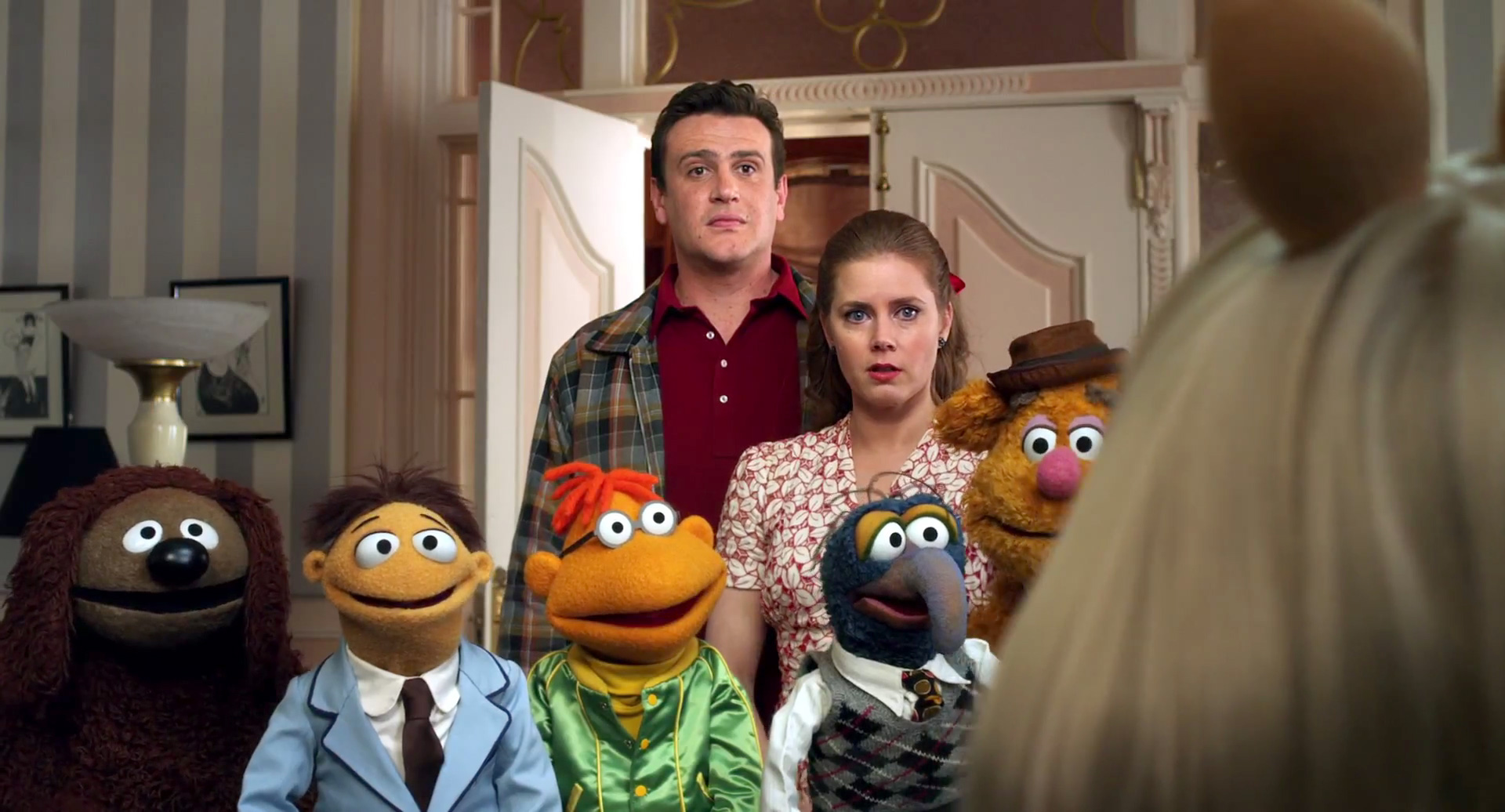
They save the theater by putting on a show.
The rather goofy hero does propose to the adorable homespun girl.
The villain almost wins several times but is eventually foiled.
There are cameos and inside references to the original TV show.
Things blow up but no one gets hurt.
We learn you can do it if you try and being with your friends is the best thing.
There are flaws in the movie, but they don't matter.
60's Sitcom
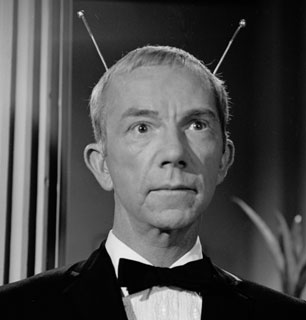
I can think of many reasons why this is not the case, discussed below, yet would still give it a qualified agreement. The entertainment business was close to the only sector to accept homosexuality, and even there it was not reliable. It was part of a general acceptance of people a little different from the norm. There was a lot of posturing and self-congratulation about it - Hollywood (New York, LA general) was not the only place which accepted Women Who Speak Their Minds or liberal political ideas; nor was it entirely deserved - other American sectors were less racist, for example. But in the main, the arts and entertainment industries were a place where a person could acknowledge or even flaunt homosexuality. So the writers for My Favorite Martian probably never had the idea of gay acceptance cross their minds, but the idea of the hidden, shameful idea actually being quite all right was likely not far from the surface.
The shows remained heteronormative for one obvious reason and one less obvious. A) They had to appeal to an audience, make money, stay on the air. B)Acceptance of gays was less a principle than a tradeoff: don't say my divorces/affairs/fetishes are wrong, and I won't criticise your homosexuality. That is often how such tolerances develop - religious tolerance here and in Western Europe owes much to property rights, for example. I don't care if you hate Quakers, Hiram. He bought the property and it's his and you can't make him move out. Unless you want the deacons to decide whether you own your piece or not. That it was tradeoff, not principle, has come back to bite them when it comes to child molestation. If Whoopi Goldberg objected to it on principle she would never say "It wasn't rape rape." That's the statement of a person being given a pass to say and do what she wants in exchange for extending that to others.
Back to sitcoms: I wrote in 2009 that a stronger theme was Missing Family Members (especially Mom). The possible creepiness of this I discuss there.

The Unusual Family motif may also draw a great deal from ambivalence about families of origin. The Munsters may simply be an exaggerated "My Big Fat Greek Wedding." I mentioned that the weird families tended to be the intact ones: Munsters, Addams, Simpsons. It's comedy by inversion, like Superman's Bizarro. It's been used for centuries because it sets up laffs quite well. It also sets up sentimentality in comedy, of filial bonds despite it all, etc.
Ambivalence is key for comedy. I Dream of Jeannie clearly plays to the subtext "OMG! That guy has a beautiful woman who will do whatever he tells her to!" (Wink, wink, nudge, nudge.) Yet consider - the show isn't funny if she doesn't have superpowers. A guy finds a pretty girl who does what he says - you could sell some episodes of that on a porno channel. You could use it as a comic bit from a minor character in a larger movie. But what are you going to write for jokes for twenty-five episodes? Tangentially, I knew even as a child (12.5) that Tony was entirely oblivious/resistant to the sexual angle of all this, but that his friend Roger wasn't. I don't see it in the scripts - Bill Dailly must've done it entirely with his facial expressions. Bewitched follows the older, Lucy-and-Ethel type of crafty-shemes-behind-hubby's-back comedy, except now the woman is clearly the more powerful one.
Secrecy, where the audience knows things the character onstage doesn't, is also comedy gold. No need to wonder if My Mother The Car is actually My Mother The Secret Drinker But Is Still A Really Nice Person, or Mr. Ed represents Wilbur's B&D dungeon. It's the fun of comedy, and if darker elements are there, they are of necessity vague and far away.

These themes recur in TV in later decades, but in the 70's were largely replaced by Wacky Ensembles: WKRP, Mary Tyler Moore, MASH, Taxi, Muppets, Happy Days, Welcome Back Kotter, Laverne & Shirley - I imagine my clever audience can think of others.
Miodowe Lata
There is (was) a Polish version of The Honeymooners. Because it follows the conventions of American sitcoms, you can sort of understand what is happening.
One in Swedish, too
Subscribe to:
Posts (Atom)