Tuesday, November 22, 2011


Thursday, October 20, 2011
Saturday, October 08, 2011
Epstein
Friday, October 07, 2011
Evaluating Baseball Managers
Let’s break it down into component parts. What is a manager actually supposed to do? Bill James broke it into three parts years ago, but I am only partly convinced. I’m seeing four parts.
A. Sorting out who can play and who can’t. For position players, this was a Terry Francona strength. If he was convinced you could play, he stuck with you, and he seems to have proved right – see Dustin Pedroia; David Ortiz at the beginning of 2009 and 2010. This is often disguised, because the manager does not choose who gets brought in, and may have little say over it at all. For JD Drew money or Carl Crawford money, you may just have to play them, whatever your evaluation is. With the recent Red Sox, this was even more obvious with pitchers. I don’t think Tito had much input into who was there, and once you have people with contracts that dictate they will be on the roster, you have to play them. You can really only evaluate Francona on who came up from AAA or was otherwise on the margin and how much they played. Who got the spot starts, the long relief, the close games? This segues into the next category, but I’m not seeing TF as being so strong there. James mentioned that this was a strength for Dick Williams, long-ago manager of the Red Sox. This may be the most important managerial skill for a young team that is just beginning to contend. Nothing else will matter if someone in the organization doesn’t get this right.
B. Managing the games. The lineup and the batting order, day-to-day and long-term. Bunt, steal, who plays what position, who is DH. Francona was minimalist in this. He stuck with a lineup and batting order. He let people run but didn’t make them run. He seldom ran squeezes, sacrifices, hit-and-runs. When you place this under Part D, this minimalism may be wise. But Francona never displayed much skill at this. In particular, his bullpen management doesn’t show much skill. He has had the extremely versatile Tim Wakefield, who was also willing to put up with shifting roles. Even with Wake, Tito has not looked that good – without Wake, I think we can call what’s left actually a poor record.
C. Getting the most out of a player/ seeing where a player could improve. Does this player need to run more or run less? Does this pitcher need to add a pitch or drop one? Does this batter need to be more aggressive or more patient? Bill James identified Billy Martin as exceptionally good at this. I would add Ted Williams. Though he was maligned as a manager, always with the same cliché that great players can’t manage players who aren’t as good as they are because they don’t understand them, many of Williams’s players had their best years while playing for him. Sometimes that is mostly a matter of getting good coaches to work for you, but a manager deserves credit for that. Does Joe Torre fit this description? I don’t know enough to answer, but I suspect that. I think this is a Doc Rivers mixed strength and weakness. He doesn’t improve players, but he is very good at slotting them where they will do best at the moment. Note, for example a few players who left the Celtics and improved, contrasted with a few players with aging skills that Doc got the best last juice out of. Have we seen any players with surprising development on the Red Sox once they came up? Maybe, especially with the position players. But it’s not a hallmark of the organization.
D. Managing the egos. This comes up in other sports as well. People criticised KC Jones for basically doing nothing, just rolling out the balls and letting ‘em play. I think the great ones make it look easy on that score. I suspect Jones may not have been a good coach of a poor team. But for all the ink spilled about the Celtics team ethos, there were some difficult personalities there. Ainge and McHale were notorious for pissing people off. Dennis Johnson was brought in as rather a risk because of his irritability in Seattle. With Bird’s intensity, one could see that going bad in a contentious situation. Often, the very light hand is the best strategy when one gets to the very top. You have a lot of guys making big money who need to be smoothed, and the people around them need to be smoothed. They think they are bigger than the team, and at moments, they are. But a manager has to keep those moments short and infrequent.
So, think Manny Ramirez here. Manny shooting his way out of town was a harbinger of how Francona was going to handle other people being jerks. His minimalist approach got the best out of Ramirez, and kept the others from breaking ranks. But ultimately, if a person is determined to be a jerk, that approach stops working. This year, too many people being jerks. Too many balls in the air. You can see some signs of that in retrospect – always much easier. But the current position no longer played to Tito’s strengths. With the money spent, your lineup was determined, so there was very little sorting. With the egos too big, minimalism no longer works (see also, Phil Jackson).
Additional baseball thoughts. Red Sox fans complain about being saddled with the Lackey and Crawford contracts. But the Yankees have A-Rod until 2017 at $25M/year. He hit 16 HR this year. They also have Jeter for another 3 years. This gives Sox Nation some hope.
Sunday, October 02, 2011
20/20 Tito
The Red Sox collapsed by going 7-20 in September. The accusation is that they were soft in many ways. People did not push themselves and play hurt, as one might expect in a pennant race. This is regarded as at least partly Francona's fault. He mighta, shoulda, coulda pushed 'em. He's a "player's manager," which means he coddled them, didn't react strongly enough to bad attitudes, etc. Well, that's true, to some extent. Some players had bad attitudes and were whining - I mentioned it as far back as July - and it's the managers job, at a few million a year, to uh, manage that. But had the Red Sox won just a few more games, had they gone an unexciting 13-14 in September, they would have won 96 games, never been challenged for the wild card, and everyone would be oohing and aahing that everyone was healthy for the playoffs, and how brilliant Tito was not to panic and let everyone heal without hurrying back. And in baseball, it is easy to find a few games that could have gone the other way.
Similarly, the Sox showed very poor focus, making a lot of mental errors in September. Sometimes they tried too hard, attempting stolen bases or extra bases - sometimes they were asleep at the switch, missing cutoff men, mixing up scouting reports, and not noticing pinch hitters and pickoff plays until it was too late. You can fairly blame this on a manager as well. But a criticism that says "sometimes he pushed them and sometimes he didn't, and he missed the balance" is a rather weak complaint, isn't it? Yet again, with even a 10-17 September, everyone here would be sagely noting that it's a long season, and keeping an even keel is as important as keeping sharp. Which is also true.
In both of those alt-histories, what Boston did in the playoffs would then be used to retrospectively interpret the managing during the season. Bad playoffs - similar criticisms to now. Good playoffs, Francona is brilliant.
He has been a wonderful manager in the past. This year's collapse - did he stick with Wakefield too much? Did he give Lackey too much rope? Did he let players make their own determination about when they should play and how they should act? Easy to say yes. Obviously, if we could replay history we would play those decisions differently. But does that make it true? He was criticised for sticking with Pedroia early in his career - that worked. Last year he was criticised for sticking with Ortiz, then for not making Ellsbury come back and play sooner. Terry looks good on those calls in retrospect, doesn't he?
I hope he gets a good gig, wherever he goes. Upper management has not been entirely complimentary about his leaving, damning with faint praise in places in hopes of diverting criticism away from themselves. But Tito left decently and didn't throw anyone under the bus.
Monday, September 26, 2011
XBH

It's about one player per year when it's legit. This year there are two: Robinson Cano and Jacoby Ellsbury.
Saturday, September 24, 2011
Time Out
It's hard to refrain from rooting for the team you have always treasured. But I am increasingly not rooting for this team. They are entitled, spoiled whiners (exceptions apply). I want them to go to time out, like your child, who you love but needs to get the message. Go sit in your room until you are willing to admit what you did wrong.
*Check the Weilland stats for first 25 pitches versus second 25 pitches.
Tuesday, September 13, 2011
Sunday, July 31, 2011
Stolen Bases
Still, it's rather fun to watch Jacoby Ellsbury climb the all-time list for the Red Sox. He is about to pass Carl Yastrzemski for 3rd place on the Sox all-time list. Ahead are Tris Speaker and Harry Hooper, both from the dead ball era when one needed something closer to a 60% rate to break even.
Saturday, July 23, 2011
Juiced
Injury is obvious. Injured players don't perform. I mention it because so many people leave it out of their calculations when projecting.
We used to say that baseball players improve until they are 26-28 years old. Some sabermetricians would shade that to 27-29 on the basis of newer statistics which they prefer. I disagree, but fine. At about age 26 or 27, BA starts edging down and power edges up. Players often maintain something near their peak value until age thirty. Most are gone by 33, certainly by 35.
Look up your favorite players from the past if you doubt this. The best players can often sustain a high level for many years, but even allowing for this, check out which year Nolan Ryan got his 383 K's, for example. Leave modern players out for the moment. Just browse around in the old days long enough to establish that even in the pitcher's era 1963-68, a hitter might have is best year in that age range.
I learned this from Bill James, who I admire as an explainer of statistics, an evaluator of talent, and a writer. But he knew the statistics well enough to know that steroids were changing the game, and he mentioned barely a hint of it. That is moral cowardice.
There are exceptions to the 27 +/- tendency, of course, but these are minor. And they are usually gradual, revealing a pitcher who is learning his craft, for example, or a hitter learning to be more selective and draw walks under a particular batting coach.
In the modern era, there are many exceptions, and we can guess why. It is tough to know for certain with many players, because the change is gradual, or because it involves an excellent player hanging on at a higher level than one might expect.
Armed with this knowledge, consider the statistical jump, at this age, for this player. A 200-point rise in OPS at age 29, and another 200-point increase at 30.
It just doesn't happen.
Tuesday, June 21, 2011
Catchers
Tuesday, May 31, 2011
Youth Baseball
I hope my face did not show the amazement I felt. Lady, they put kids where it works best for the team, so they have the best chance of winning. That's one of the lessons, that the world doesn't revolve around you and everyone does what they can to help the group effort. But I did immediately see her point as well. She sent her son to baseball so that it would work out for him and his development, not so that Joe's Storm Doors could win. The team is ultimately of no importance, the individual remains.
At first pass, this is certainly an age-related discussion. What is appropriate for six-year-olds and fifteen-year-olds is quite different. The younger the child, the more it makes sense to try them in a variety of situations, to experience different facets. It does seem just wrong to play your one dominant kid in such a way that no one else gets to do much. But having your teenage son play short because there's more going on there and he won't fade out so much doesn't seem like it is educating him into the world of adults, where the common goal has a value of its own.
Plus, as I learned in baseball more than any sport, there are kids who don't look as if they are paying attention who nonetheless are. Taken to extremes, however, no one is ever going to believe you. (I wonder whether, if my second son could see videos of himself playing second at age fourteen, he would agree that any reasonable observer would conclude that the blond kid was absolutely not ready for the play, and finally understand his coach's and father's ire - or whether he would see entire justification instead, noting with full accuracy that as the pitcher let go of the ball, he was always in position and facing the batter. Both are true - which would he see, now that he is 27 and works with youth groups a lot?)
Sunday, February 20, 2011
Time Travel and Sports
I am ashamed to note that I had forgotten about Reggie Lewis, and that jumped well up the list. Which put me in mind of Darryl Stingley, paralysed in his prime, who I had also overlooked. I had the trifecta of less devastating injuries at inopportune moments already on my list: Ted Williams getting injured just before the 1946 World Series, Tony Conigliaro getting injured just before the 1967 World Series, and Jim Rice getting injured just before the 1975 World Series. (Conigliaro is a crossover here. The injury wasn't career ending, but he was never the same, and he died young, likely from sequelae of the head injury.) In terms of changing events, just getting them those days off would be big.
Granting that the life tragedies and sports tragedies are not on the same level but overlap, the time travel aspect suggests that sitting down and having a conversation with Carlton Fisk in the spring of 1974 could solve a lot of problems. His injury, Wise's avoidable injury, Rice's injury, Armbrister, Eephus pitch, change in the wind just before Bucky Dent's* at bat, Lou Piniella's deke. Just as a bonus, getting Evans to listen to Lau/Hriniak sooner, and pulling in whoever else would listen would be great, too.
The 1986 World Series. A target-rich environment. The searing pain comes from so many simple things that not only could have been done, but absolutely should have been done. Pinch-hit Baylor instead of Greenwell. Give Bob Stanley the honor of the last out (he could have gotten one of those guys), Spike Owen's pickoff, Dave Stapleton... I just can't stand it, even 25 years later.
The 1986 Super Bowl, different story. Even though the officials took away a touchdown (Stephan Starring didn't step out of bounds) and gave the Bears a field goal (missed call end of first half), and Lin Dawson got a freak injury, all of those together wouldn't have given the Patriots that win. Super Bowl XLII (Helmet Catch), same thing. Sure, there was a lot of luck on that play, but you don't want to take away the greatest catch in history, even if it is against your team.
The 2003 playoffs were not the worst moment, but they were so representative, such a culmination of all of Red Sox history that they deserve mention.
On a slightly different tack you could mention the Red Sox not signing Willie Mays and Jackie Robinson in 1945 (they uh, failed the tryout. Sure.) because Tom Yawkey was a racist bastard.
* A measure of how crazy and obnoxious George Steinbrenner was can be observed by noting that Boston fans felt sorry for Bucky Dent, always known before as Bucky F-ing Dent before that, in his dealings with Steinbrenner.
Completely different direction.
I imagined a sports interview, and quite automatically put it in Monty Python style, of an announcer asking some knowledgeable fan of a long-suffering team - probably West Ham or Leeds, then - what moments he would change in his team's history. As soon as he listed one "Love to have that disallowed goal back in '74. Have Allan Clarke hold up just a bit..." the announcer would get distracted into the mechanics. "But what if Clarke wouldn't listen to you about that? What then, eh?"
"Well, if I'm getting to change what I want that isn't the issue, is it? It's rather assumed or there's no point to the question."
"Ah, but what if Clark tells you to f-off and not tell him how to play? What would you do then?"
"Oh, stop time and pull on his jersey just for a moment, then. However you like."
"Wouldn't work. The pull would only have effect while time was moving, and then you'd be seen on the pitch and the game would be up, wouldn't it? So that's out."
"Move his foot back six inches."
"He'd tip over."
"Look, you asked me here to talk about what moments I'd change, not to give a dissertation on the possible contradictions of time travel."
"So you're admitting you couldn't do it then, aren't you? The whole thing's a fantasy."
"Well of course it's a fantasy. That's what you asked, innit?"
"Forget Clarke then. He's going offsides, nothing you can do, forget about it. Give it up man, it happened decades ago. How about the '78 Club semifinals? What would you do there?"
"First I'd cool down Trevor Cherry against Argentina in '77 so he doesn't lose those teeth and get sent off. He wasn't quite the same after."
"Nah, you couldn't calm Trevor down, you'd just make him madder. You'll have to find another way."
"Hampton, then - look, this is ridiculous. Your entire premise is that it's a fantasy where I can change history, then you're complaining because I'm fantasizing and can't change history..."
Well, it seemed funny to me, anyway. Looking at it in print an all, it doesn't seem so impressive. Perhaps if you get the accents right.
Saturday, February 12, 2011
Hard-Luck Cleveland
Update from 2011-2024
Since that time, not much better, but at least not heart-wrenchingly bad. Lebron came back and got the Cavs to the finals four times, winning once; the Browns made the playoffs in 2020 and 2023 but fell out quickly. The Indians/Guardians still haven't won a championship, but they have made the playoffs seven times and made it to a World Series once. For younger fans, this is probably enough. For middle-aged fans a bit of relief. For older fans, it sooths the pain some, and there are fewer who remember the awful times every year. Still worse than Boston, who has had good teams in all sports from 2001 on.
*********
Originally published in 2011
On sports radio last week, a Cleveland fan was asked if the record-breaking losing streak, on top of Lebron going to Miami, were the worst moments in that city's sports history. "Not even close," came the reply, but I was getting out of the car after only hearing one other event on his list. I'll come back to Cleveland later.
I, of course, started compiling my worst moments in Boston sports history, which I automatically assumed would far outdistance anything any other city had to offer.
I went to Bing this week for other people's lists of Boston's worst to see if I had forgotten something important, and interestingly, a listing for Cleveland's worst came up in the first 10 hits, indicating that this was a site that had a lot of hits, and Boston was mentioned in it somewhere. I kept seeing Cleveland's worst moments in hits 11-20, 21-30 and on, so I figured I would go back and check after I had done my Boston research.
In a fit of objectivity, I supposed that every city must have its Worst Moments and zipped various cities in to the search engine, expecting to semi-acknowledge, however reluctantly, that every city's fans think they have gotten the shortest end of the stick.
This is not so.
Philadelphia's worst moments include many entries of terrible things its fans have done, not its teams. True, but not the same thing.
New York doesn't have general lists, but lists for its various teams: worst Mets moments, worst Jets moments, etc. Because New York has teams in the the same league within its rooting region, it does not think of worst moments shared by the whole area. The Jets and Mets do indeed have terrible moments, but it isn't a shared NY experience, where everyone you meet the next day is shaking their head and looking bewildered. Not the same thing.
Chicago and Los Angeles have similar situations of divided local loyalty, but even granting that, their lists don't have that zing. Michael Jordan retires. Well, players do, and sometimes prematurely if they have gambling problems. The Bulls breaking up after six championships. Yeah, that'll stir a lot of hearts in the rest of America. Walter Payton tragically ill after he retires. I loved Walter Payton, but that's a bad life moment, not a bad sports moment. And Los Angeles barely has any listings under any category - they follow the stereotype. They don't care out there, they leave in the seventh inning.
San Francisco, same thing. They just don't identify out there.
Detroit has a list of years that their team was really better, but lost in the playoffs. That's a pathetic definition of worst moments. That's just real life for a sports fan. Happens all the time.
Washington has had many bad teams. No defining heartbreaking worst moments. Dallas, Pittsburgh, St Louis? Please.
But Cleveland now, Cleveland is in our league in this category. They have been on the short end of too many The's.
The Drive, by John Elway - against Cleveland
The Shot, by Michael Jordan - against Cleveland
The Catch, by Willie Mays - against Cleveland
That's all three major sports, BTW.
Add in Art Modell moving the Browns, the worst-ever Cleveland Spiders of 1899, ten-cent beer night, your all-time best team playing half its seasons trying to break in to the top league (the Jim Brown/Otto Graham Cleveland Browns), the usual city list of championships thrown away (by Brian Sipe, by Jose Mesa, by Ernest Byner), one of the worst owners in sports history (Ted Stepien) - and Lebron puts Cleveland over the top into Boston's category. I think Boston still gets the nod for worst moments, but we have also had good teams and some very fine moments interspersed. Cleveland, not so much. You are the only poor bastards I will acknowledge into this conversation. Tip of the hat.
For the record, my Boston list starts with Len Bias.
Sunday, January 30, 2011
Running Up The Score

Check out the peacock at Jan's Cascade Exposures site. (Jan, can I have permission to upload it here?) The theory is that peacocks developed these useless and resource draining displays to signal to potential mates "I have got energy to burn, baby. Great genes. Great access to resources. Better get on this bus now!" Anyone who has watched humans from about age 11 to, well, it does slow down gradually, so lets be generous to each other and say 25, can see that we do it too. Males and females, and we'll touch on the differences a bit. It sometimes seems that they can barely help it. Signaling erupts spontaneously even from those who aren't especially interested in dating.
Less-often mentioned is that societies do this as well. Athleticism is a big one. It is not merely the obvious display of "our men are strong and trained in marksmanship. Be afraid." (And why would you want to notify neighboring tribes how attractive your women are anyway?) The additional signal is "We are prosperous enough that we can squander the energy of our young men into display. We are prosperous enough that we can hold our young women out from grinding labor and preserve their beauty." Subsistence economies can't afford to forgo those resources. At increasing levels of prosperity, this becomes more and more intentional and organised. As I cast my mind around previous civilizations, competitions show up more frequently in the record as nations gain resources and assume ascendancy. Beowulf is challenged with the rumor that someone named Breca beat him in a swimming race. Which the hero answered with one of the great athletic trump cards, "Yes, but I was fighting off sea monsters at the time. And did I mention that it was a five-day race in full armor?" The competition between Wu and Yue brought forth Kung Fu. Odysseus came back to win an archery contest, and the Greeks eventually put this whole collection of competitions into an Olympics.
There was an idea of teaching virtue through sport in all of these, becoming more explicit as civilization advanced. Courage, certainly, and determination. Loyalty starts to creep in. And by medieval times, ideas of fairness, proportion, and proper conduct are becoming part of the sport package. Not much of Christian virtue, except as those overlap the secular virtues. Loyalty and courage can be in the service of evil as easily as good.
Yet you will notice that these are still individual sports and competitions. The Mayans had a group melee with much death which ended when someone could score a goal - at which point the losing team got slaughtered. Medieval tournaments had jousting for the elites, but a general bloody scrum was often the highlight. But true team sports, other than the near-combats, don't come along until much later. Town vs. town games might be held yearly at most, and often were no more complicated than capturing the other town's goose and ripping its head off. Mob football was largely chaos. Highland games were still largely individual.
Wellington's comment "The Battle of Waterloo was won on the playing fields of Eton" always struck me as a rather silly line, an overidealisation of the importance of sport in developing character and hardening of the young men of a narrow English elite. But as I think of it in this context, there's something to it. Only at very high levels of organisation, when a culture is quite prosperous and increasingly dependent on interlocking parts of economy and governance, do team sports appear. The idea of coordinated effort becomes an important virtue to impart. Engineering and architecture, trade and transportation, become central to continued growth and prosperity - and university elites take on team sports at exactly this time in history. Pickup games of baseball and rounders - team games but still largely individual - show up in America in the 19th C. But team sports as we now know them are mostly confined to the university until very recently. Even in England, who really led in this idea of team sports, rugby and association football are early 19th C, and school sports; cricket no more of a true team sport than baseball; racing sports might go so far as to include relays.
The church varied in its opinion of sports from weary tolerance to outright disapproval. It was not accidental that Shrovetide football occurred in the revelry just before Lent. The Puritans were highly suspicious of games as a waste of precious time, though they allowed that the physical activity - and notably the camaraderie among participants - could have salutary effects on vigorous young men.
But the approval and warm embrace of sports by Christian churches is very recent, and tied in strongly with the overlap of new societal virtues with specifically Christian training.
As a sports fan, I don't like where this is going...
Friday, January 28, 2011
Post 2800 - Running Up The Score - Outline
The discussion of running up the score has led to broader issues, as these things often do. As my scratched notes in meetings suggest that this could go on at chapter length, I wanted to get some thoughts in early, just to prime your thinking along certain lines. What cultures have had sports, historically, and what function have they served? Breca, Wu and Yue, the Greek Olympics, and Roman Circuses will come in here. When do team competitions come into the picture? Peacocks, Waterloo, Mayans, and Medieval tournaments will come in here?
What is it that sports are supposed to teach, and how has the church looked at this over the centuries? How is the American experience different? Puritans and De Tocqueville come into that. And we do get back to the question of running up the score, but hopefully in a larger framework.
You'd really like to sit next to me at meetings, BTW. They go faster.
Thursday, January 27, 2011
Running Up The Score - Respecting the Game
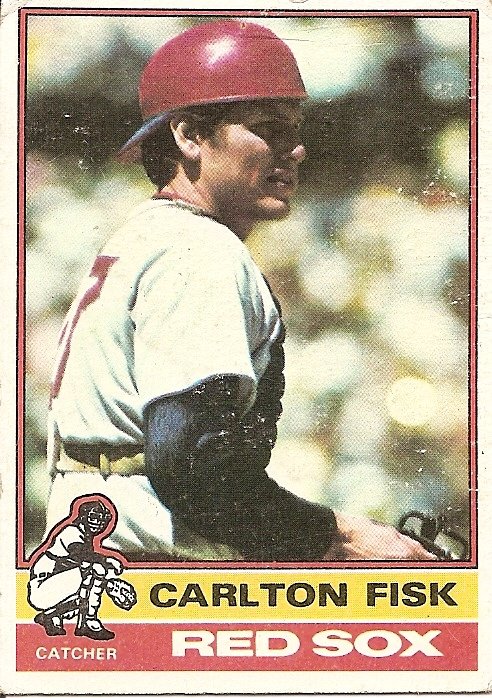
Carlton Fisk once chased Deion Sanders, an opposing player, down the first base line for not running out a ground ball. He was incensed that someone would treat the game of baseball with that disrespect. That’s not the way it’s done. That’s not how the game is played.
I absolutely understand that value, but from some angles I’m not sure it makes sense. I grew up on that, so Chip Hilton, so Frank Merriwell. It is tied in at deep levels to self-respect, respect for one’s opponent, and a whole array of concepts of goodness: Manliness as opposed to mere masculinity, fair play, adherence to the spirit of the law rather than the mere letter. One is to play as hard as one can, never give up, no matter how far behind you are. Which implies, though it was not said, no matter how far ahead you are.
And in fact, games do have unwritten rules that make clear that a certain amount of backing off is appropriate with a big lead. You don’t steal a base in late innings when you have a big lead. When the clock ticks down to appropriate levels, the QB takes a knee to run out the clock. Basketball teams with large leads don’t take that last three-pointer at the buzzer, they dribble out the clock. And even before that, coaches are expected to put in their second string, to not run trick plays, to not use the full-court press. Small things, which don’t make much difference in the final score, but they declare that the value is there.
This, significantly, is the norm in the professional game and DI college sports (but I repeat myself). Even at that level, where a take-no-prisoners approach is taken for granted, there are clear signs that too much is too much. “Respect for the game” includes respecting something else more than the game.
That, I think, is getting closer to the center, and will be my next post.
Wednesday, January 05, 2011
Hall of Fame
Just so you know, baseball's hall of fame has always been insane in its selections, except the first year. In 1936 they put in Ty Cobb, Walter Johnson, Babe Ruth, Christy Mathewson, and Honus Wagner. You might argue around the edges if these were indeed the top five to that point, or just five of the top ten, but they were all clearly top-shelf qualified.
The very next year, they went with 3 players, 2 great and one legitimate. They elected two managers, McGraw and Mack, which seems reasonable. And three executives, two of which you never heard of. Then more executives, plus a move to include players from the early years. Which they got approximately sorta right. Then they stopped electing anyone at all through most of WWII. After the war they elected more guys from old baseball, plus Tinker, Evers, and Chance, who weren't that great, but were in that poem and all.
The 20's and 30's were the big hitter's eras of baseball. The National League averaged .300 in 1930. The whole league. Consequently, just after the pitcher's era in the 1960's, people voting for the hall of fame saw all those gaudy numbers from a generation earlier and voted in a lot of guys who were pretty good but not great who played in the 20's and 30's. Joe Medwick. Earle Combs. Chick Hafey.
Softest roads to the HOF?
1. Outfielder or 1B in the 30's
2. Braggart before 1910 who played a long time
3. Play for the Yankees in dynasty years.
Monday, December 13, 2010
Crawford, Martinez, and More Statistics
I was prepared to concede Ben's point about Martinez, as I had simply forgotten about his poor percentage of base-stealers thrown out. It was indeed maddening to watch at times last year. But...Martinez had 27 out of 126 caught stealing. So 99-(27x2.6) = 29 bases, which equals 2.9 runs for the season. Call it 3 runs. Not so much. It is indeed discouraging while it is happening, but like base-stealing itself, there's more drama than effect.
It does bring up the issue whether pitchers did worse when Martinez was catching. Nope. They had an ERA slightly over 4 with Martinez, and slightly over 4 with Varitek. Martinez's numbers were improved by Buchholz, but he also caught a lot of games by Beckett, which dragged him down (and he caught him much better than Varitek). At least publicly, the other pitchers have had praise for him as well. If there was a pitcher's conspiracy to get him out because he was screwing them up, it's well hidden. Not that he couldn't be screwing them up and they not realise it, but that becomes a less likely possibility.
I think it is fair to also concede that even if Martinez's catching days are not over, they are at least numbered. He is a DH, and perhaps a declining one, so mixing him in with Ortiz, backup catching, and whatever-you-got for a year means he's a year older when he becomes your full-time DH, and he's likely insulted to boot. Still, OPS of .844 to Crawford's .851. Essentially the same at half the price. And that's not even figuring in Jason Bay, who is the real comparison to Crawford. Martinez was an extra. And the Yankees are also pursuing Russell Martin.
Fans and GM's like to have good players locked in for multiyear deals. It means fewer problems to solve each year and builds fan loyalty. But "locked in" has two meanings. Things change.
As I said, I generally like what we've got - plus rumors of Ordonez and Beltran, and relievers Downs and Fuentes. It's a good team and it should do well if healthy. But an injury here or there, or Bay bouncing back from his injuries would only highlight what could have been if they had decided to spend that kind of money a year ago.
Saturday, December 11, 2010
More Crawford
Didn't the Yanks help the Red Sox out enough already by re-signing their utterly immobile captain for three more years? Derek Jeter, a handsome marble column of a shortstop, has finally gone from "iconic" to "Ionic."Ugly stats in more detail than I provided.
I promise to get back to non-sports posting later today, after laundry, painting, moving stuff, and maybe shopping.