Tuesday, February 16, 2021

The Opposite Game Again

 A favorite complaint of mine is people saying always, never, obviously, without question, undeniably, 100%, zero and other statements of extremity.  I saw a new one over at Althouse, of Rob Reiner saying "Let's be clear..."

Whenever someone starts by saying "Let's be clear," they are doing the opposite.  They are taking a chancy speculation that they can't prove and hoping to bully any possible disagreement into submission by asserting it overdramatically, using words like "worst," and phrases like "one thing and one thing only." People are overdramatic for personality reasons, even to the point of personality disordered ones. They treat their opinions as facts because they cannot see the difference.  I acknowledge that they may be able to do so in theory, and likely can do so about less-emotional issues.  Yet as soon as they care, often for reasons of protecting a world-view, they cannot draw back.

The intent is to obfuscate, not clarify.

After Virtue Comment Thread

On my brother's FB page (which I never visit anymore, so it may be long gone) it says "When you're accustomed to privilege, equality can feel like oppression."  Which is entirely true, and more deeply true of liberals than of anyone else, not just conservatives. No one cancels them.  The first time I saw the comment I thought "That's what I have been saying to you about media for decades. You have said it's not true, and your evidence always boils down to social rather than logical claims - that all the other media, and all your friends, and all the liberal fact-checkers all say it's not true.  So it just can't be."  I still think that every time I remember the quote. Bullies, remember, are not people who have low self-esteem who are overcompensating, but people with artificially high self-esteem that reality can never validate, so they strike out at others. 

JMSmith's comment about faction versus party was valuable, as it clarifies what type of discussion is taking place. A party wants to be heard and to negotiate a solution, as in a party to an agreement.  But a faction seeks only victory, to assert that its opinion is really a fact that is immovable. I had said there was a loss of rationality in our current discussions, now including conservative factions as well, but he is correct that it is not rationality that is lost, but charity.  It reminded me immediately of the GK Chesterton quote from Orthodoxy (I think also in Everlasting Man) “If you argue with a madman, it is extremely probable that you will get the worst of it; for in many ways his mind moves all the quicker for not being delayed by things that go with good judgment. He is not hampered by a sense of humour or by clarity, or by the dumb certainties of experience. He is the more logical for losing certain sane affections. Indeed, the common phrase for insanity is in this respect a misleading one. The madman is not the man who has lost his reason. The madman is the man who has lost everything except his reason.” Yes, there is no proportion, no charity. The reason still functions, but in an odd, unrecognisable way.

So also, David Foster's link to Paul Graham's essay on Orthodox Privilege.  (Orthodox in the sense of being non-heretical according to whatever power holds sway in your environment, not Greek or Jewish Orthodoxy.) They do not know what they don't know.  They believe all opinions can be expressed, because they hold no opinion outside the orthodoxy. Insisting that you say only what is allowed just seems polite to them. To insult who they will but endure no criticism is considered only holding you to a standard of politeness, nothing more. To them the correct ideas are simply obvious because everyone they hang with holds them. Not all of them are sneering or mean. And none of them think they are.  they are sure it's all those others.  Some are quite earnest in wanting to explain to you where you have gone wrong, because look at all the people who believe x. They think if you will just let them explain it will be as obvious to you as to them.  There is no way into the circle. A new fact has no place to be stored, no cuphook it can be hung from.  It just drops away.

To give up a single point is to risk all. At some level there is an understanding that there will be no friends anymore - because they know too well the sneers and condescension they share about all outsiders. The entire intellectual edifice might fall, slowly, slowly at first and then suddenly. So there can never be an interaction, anything to give the other fellow his say. There is usually nothing but contradiction.  The most polite of them might hear you out uncomfortably, thinking they are being patient.

Monday, February 15, 2021

Chicago Teachers Interpretive Dance

"It's our livelihood...versus...our lives."

Well, no, it isn't really.  I think that's where you're going wrong, right at that point.

If I lived in Chicago I think I would be praying "Don't let my kid get any of these overdramatic women next year."

Though if I were in high school I might be thinking "That would be awesome.  Easy A! I know exactly what to say and what to do for a final project. Honor roll, here I come!"

Sunday, February 14, 2021

Dr Jill Biden

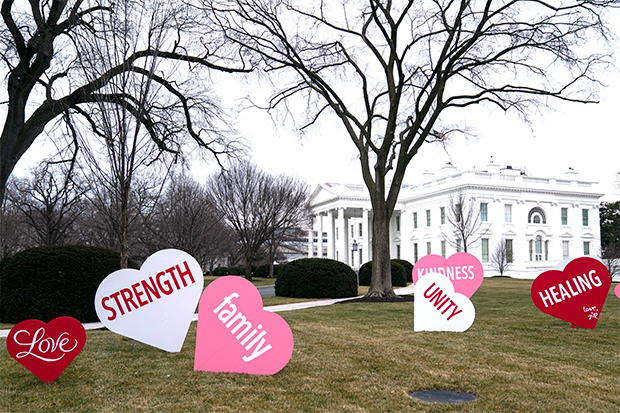
She supervised the creation of an elementary-school entrance decoration at the White House.  Imagine what would have been said had Sarah Palin done this in Alaska in the 2000s.


More on Slate Star Codex

Apparently even his friends are using his full name, Dr. Scott Alexander Siskind now, and he has a new psychiatry practice in San Francisco, Lorien, and a new blog Astral Codex Ten. Writing in defense of him, Scott Aaronson makes the following comment about the New York Times article. 

The trouble with the NYT piece is not that it makes any false statements, but just that it constantly insinuates nefarious beliefs and motives, via strategic word choices and omission of relevant facts that change the emotional coloration of the facts that it does present. I repeatedly muttered to myself, as I read: “dude, you could make anything sound shady with this exact same rhetorical toolkit!”

Exactly.  The insistence that they are still mostly-respectable reporters even outside of the science, travel, and style sections rests on wordings, innocent looks, and diminished oaths ("By Saint Loi!") that fool no one beyond a high school AP English class unless they want to be fooled or are in on the joke. We learn the tricks of our trade.  I was complimented once on having written a chart note that told any experienced clinician exactly what they needed to know about the patient, even though it could not be said outright.  I was deeply complimented at first, but later wondered if this might be a moral deterioration on my part. I confess I don't know where that line is and I may be excusing my own bad behavior.  Yet I at least know I am not in the same category as modern journalists and their butter-wouldn't-melt disingenuousness.

Quillette also has a good article on this.

Hard Words

 "A most astonishing misconception has long dominated the modern mind on the subject of St Paul. It is to this effect: that Jesus preached a kindly and simple religion (found in the Gospels) and that St Paul afterwards corrupted it into a cruel and complicated religion (found in the Epistles). This is really quite untenable. All the most terrifying texts come from the mouth of Our Lord: all the texts on which we can base such warrant as we have for hoping that all men will be saved come from St Paul."  CS Lewis Introduction to JB Phillip's Letters to Young Churches.

I have long used the JB Phillips paraphrase of the New Testament (which came later than this book, which is partial), largely on Lewis's affection for it.  Fundamentalists get all nervous about paraphrases, thinking that they are not reliable or trustworthy, somehow. How dare you paraphrase the BIBLE? Even evangelicals get affected by this. Yet anyone who has ever translated from one language to another or even dealt heavily with translations knows that paraphrase is far more accurate in meaning than trying to make sure that the combination of letters that came down to us textus receptus is the true and shining Word of God.  Having those exact words is a good check on going too far astray, and correcting our work.  But literal translations are horribly misleading.  Every language has idioms and phrasings that in their literal versions make no sense. What does it mean to "get your act together," or to "pull someone's leg," or to "hit the sack?" At every moment in reading Hebrew or Greek there is some danger of this.  Hopefully, we have smoothed these out over time with scholarship and common sense.  Yet are we absolutely sure of that?

We might laugh at these in heaven, saying "Amos!  I thought you meant something completely different!  This is hysterical." That is why we should hold such things lightly now, doing the best we can to muddle through with what we've got. The long meaning, verse after verse or repeated many times in the scriptures should command our greatest attention, and puzzling things should be regarded as...puzzling and...intriguing. They should in no way be discarded.  They may someday reveal a meaning to us that is key to our understanding.  But we should be humble about texts.

As to gentle Jesus and harsh Paul, there is Matthew 10.  This is troubling to read.


Saturday, February 13, 2021

Wodehouse on Truth in Autobiography

Corresponding with co-author Guy Bolton in 1946 about their memoir Bring on the Girls of their years in the musical theaterPG Wodehouse tells him

I think we shall have to let truth go to the wall if it interferes with entertainment...that is what we want to avoid in this book - shoving in stuff just because it happened. Even if we invent every line of the thing, we must have entertainment.

That may be the only answer left to my previous rant.


After Virtue

I ran across the following quote today.  I have not read the book quoted but am likely to, after seeing the other provocative quotes from it

   [Protesting] is now almost entirely that negative phenomenon which characteristically occurs as a reaction to the alleged invasion of someone’s rights in the name of someone else’s utility.The self-assertive shrillness of protest arises because the facts of incommensurability ensure that protestors can never win an argument; the indignant self-righteousness of protest arises because the facts of incommensurability ensure equally that the protestors can never lose an argument either. Hence the utterance of protest is characteristically addressed to those who already share the protestors’ premises. The effects of incommensurability ensure that protestors rarely have anyone else to talk to but themselves. This is not to say that protest cannot be effective; it is to say that it cannot be rationally effective and that its dominant modes of expression give evidence of a certain perhaps unconscious awareness of this. Alisdair MacIntyre After Virtue,1981.
As the rational argument cannot be either won or lost by either side (in these days, because of the incomensurability, the lack of common ground or common measure in 20th C assumptions, which he attributes to the influence of Nietzsche), there is no use for argument unless it can be weaponised. Those who would attempt to discover truth are not refuted, but merely ignored.  I usually regard this as an evasion by those who wish only to argue a particular side, not engage in a discussion. Yet it may be, as Lewis predicted in The Abolition of Man and Macintyre claims (elsewhere, not in this quote) After Virtue, that they are not even capable of such a thing. The faculty may have atrophied.  they may not even have been taught it at a critical time.

Those who think only in terms of Will to Power will assert that a particular source of information, such as an author, a newspaper, a group cannot be relied upon because they are hopelessly biased.  They have a stake in the outcome and their pronouncements should be disregarded. When a rational opponent agrees in part, but points out that this applies equally to the other sources that the protestor is relying on and makes the counter assertion that some things can be known at least approximately, and a common ground should be sought, this is in practice ignored.  Whether the concept is acknowledged in principle or draws only a blank stare is irrelevant. The rational point is disregarded - because who is in power is all that matters.

I have been very hard on liberals on this score for years.  Not because they are incapable of reasoning - many are, and some better than I, but because they have tolerated this sort of nonsense as a practical matter regardless of what they are otherwise capable of.  A frequent example that something reported on Fox News is dismissed because that source is biased.  When I counter that the sources they rely on are equally biased and perhaps worse. The closest I get to a response is that sometimes the person will make a general comment that of course every source is biased and then proceeds as if the last thirty seconds of the conversation have not occurred. This is not merely with known fools or highly defensive people who fear they will be outgunned if they engage with me, but educated people who show ability to weigh pros and cons in other circumstances. 

They do it because they can get away with it.  They do not have to respond, because they can increasingly erase difficulties. Problems just go away. Like this one.

This is increasingly true of conservatives as well, including, now that I think of it, the similar question of news sources. If they were merely asking How are we to know anything - about Covid, or climate, or political accusations then they could be answered, as i have attempted four times in different places over the last two days.  There are ways we can at least get rid of some claims, and we can identify various strengths or weaknesses of Tom's numbers, or Dick's or Harry's. But the followup responses have been very disappointing.  they have amounted to "No, we can't really know anything because I am rejecting Tom and Dick. Therefore I will believe Harry." I heard many times since Trump started winning things in early 2016 that once "we" have power, we will be able to do the same thing.  We won't have to listen. And many didn't, and now they still are not.

We might see through a glass darkly, but we can at least get a sense which direction the sun is. 

MacIntyre again, same subject:

 What this brings out is that modern politics cannot be a matter of genuine moral consensus. And it is not. Modern politics is civil war carried on by other means,

Update: JMSmith makes some excellent distinctions in the comments, which I would refer you to, including " It is charity that disappears when party gives way to faction, not reason."


Post 7600 - NYT Doxxing Scott Alexander

Steve Sailer over at Unz.com breaks down the NYT hit piece on the shutting down of Star Slate Codex months ago (because they were threatening to doxx him). I wrote about it at the time, and we now have an answer to Donna B's first comment there, don't we? Yes, the Times will publish it anyway.

Sailer does a good job pointing out that many of the accusations against Alexander don't have much to do with him, but with people also in a group he's in, people who have said good things about him, people who might be commenting on his site, and just People Like Him in general.  Some of these people are second-cousins to racists, too. Or at least, what a lot of people reading the NYT think are racists. There is also the odd bit about referring to the psychiatrist as "Mr" Alexander, which seems odd after the kerfuffle over whether Jill Biden's EdD entitled her to always be addressed as "Dr" if she declares for it. He points out the double-standard on doxxing and giving credit, too.

These are quite simply horrible people, and the danger is not the free speech on Slate Star Codex, but that they have powerful microphones to condemn even though they do not display his rigor. It is bad enough when there are bullies, and bad enough when there are teacher's pets.  It is catastrophic when they are the same folks (as in The Silver Chair).

Apparently brilliant and influential Silicon Valley people were regular readers.  I wondered why the level of commenting was so high and how there were always already 200+ (sometimes into the thousands of) comments in place by the time I got over there. These are the people who live online. Small fish like me can say unwoke things and no one much cares. The racial statistics for violent crime are what they are, and there is one large obstacle to the assertion that this somehow must, simply must be the result of cops arresting them for lesser stuff, or the legal system being against them, or whatever. For homicide charges, you need a body.  You can't make one up and you can't make one go away. ("Cause of Death" can be bent a little at the edges to make some homicides look like something else on paper, but that's pretty limited.)

But influential people are especially not allowed to think bad things.

While I was over at Unz I also saw a very interesting essay by the psychologist James Thompson reporting on the long-term followup of those abused as children and what the key factors were in whether they had difficulties as adults. There has been long and contentious debate whether the severity of the events or the personality of the individual were more important.  One can see how this would affect treatment, approach, and certainly culture and politics. Newer studies are showing that people's subjective impression of whether abuse occurred is the strongest factor. That will put the cat among the pigeons in trauma studies, if it is allowed to spread widely. The site is either not letting me comment or comments are under moderation.

Friday, February 12, 2021

Snow

My son north of Houston may get snow on Monday.  He is from NH, his girlfriend from outside of Pittsburgh so they find the actions of everyone else amusing.  The school system, for example, has sent out a bulletin with a list of emergency numbers including the National Hurricane Center, the Houston Flood Warning system, and the Hurricane Preparedness guide. Their friends in the north are reminding them that proper preparation includes running out in a panic to get milk and bread.Dunkin' Donuts is seriously missing a trick here by not installing the idea in people's minds that they should also go get donuts and coffee, because God Only Knows when you will get out again.

I mentioned recently that CS Lewis's love of the quiddity of weather is not so exciting as one would think, given the very moderate character of English weather.  As here.


Thursday, February 11, 2021

Bruce Packard, RIP

Colonel Bruce Packard, 1936-2021.  The obituary says he served 25 years, but that is a misprint, it was 35 years. It mentioned he liked to talk politics, but doesn't mention that he considered himself "slightly to the right of Genghis Khan." I sang in choir and men's chorus with him, mostly years ago, and had him in a few of my Sunday School classes. He could only get about with the aid of a walker in his last few years but would arrive early enough to get back to the last row of the choir with the other baritones, pushing himself quite hard despite the discomfort. He was fun to be with back there - except when he felt others weren't taking things seriously enough. A formidable memory.

Public Radio and Kids During Covid

 "The Exchange," a New Hampshire Public Radio show did a feature on what local kids are doing coming of age during Covid.  First up was a chair of the Young High School Democrats organisation; next, a teen who has been trying to do work for "diversity;" the third, one who worked on the Joe Biden campaign.

They do not even perceive their bias when it is this obvious. These are not mean people trying to suppress other voices, these are oblivious people who only perceive certain stories as worthy. 

Of course, CS Lewis would argue that this is also a dishonesty, a self-dishonesty, an intellectual dishonesty that cannot perceive itself. It was a profound lesson for me to learn early on, that refusing to see oneself is also dishonest, and not a merely innocent error.

Public Transit

We started saying it here long ago, that Subways, Buses, Light rail, and Cabs (I added elevators) were huge drivers of the spread of C19 in NYC.  New York, in turn, drove the spread just about everywhere else.  It's nice to see that there is now supporting evidence for that. MIT study.

Liturgy

There is no subject in the world (always excepting sport) on which I have less to say than liturgiology. And the almost nothing which I have to say may as well be disposed of in this letter.

I think our business as laymen is to take what we are given and make the best of it. And I think we should find this a great deal easier if what we were given was always and everywhere the same. To judge from their practice, very few Anglican clergymen take this view. It looks as if they believed people can be lured to go to church by incessant brightenings, lightenings, lengthenings, abridgements, simplifications and complications of the service. And it is probably true that a new, keen vicar will usually be able to form within his parish a minority who are in favour of his innovations. The majority, I believe, never are. Those who remain—many give up churchgoing altogether—merely endure...

A still worse thing may happen. Novelty may fix our attention not even on the service but on the celebrant. You know what I mean. Try as one may to exclude it, the question, “What on earth is he up to now?” will intrude. It lays one’s devotion waste. There is really some excuse for the man who said, “I wish they’d remember that the charge to Peter was Feed my sheep; not Try experiments on my rats, or even, Teach my performing dogs new tricks.” (CS Lewis, Letters to Malcolm: Chiefly on Prayer, 1964)

I spent eight years in a liturgical church, and have been at liturgical service since then. I like them. I still consider it a great lack that we do not have the Confession at the beginning of any of our services, not even in preparation for the Lord's Supper, not even for Lent. That order of worship is not arbitrary. I do recall over many years people complaining about "having the same thing every week."  While that is not strictly true, there is a good deal of truth in it. These complaints came from either young people who had grown up with the service and now found it tiresome or from other denominations who thought they did not have a liturgy and had disdain for what they felt was rote repetition with no life. The Jesus people and the various Charismatic renewals were very big on having things that they found fresh and spontaneous.   I noticed that those quickly gravitated to patterns of their own - patterns that simply happened, not thought out.  There would be a certain number of minutes of singing, which was sometimes called "worship time," followed by some prayer with stock phrases, then a correct amount of further singing - one could sense how much - then a lesson, or prayer requests with explanations. 

It seems we will have liturgy regardless, the only question being whether it is intentionally designed with an eye to what has been considered essential to worship. Some black churches retain processions, which I think is a good thing.

I recall the itch that some felt to keep tinkering with the service. The new liturgy was always going to fix everything, to capture the modern, er, whatever better than what we had, which seemed so 1920s or 1940s, or 1960s to us now.  Everything that is not eternal is eternally out of date, as Lewis also said.  I understand the desire myself, and have created liturgies of my own for special occasions, with the pastor speaking, then the congregation, then the men alternating with women or the left side of the congregation with the right, or the children's voices and the adults, all to create a sort of music of its own. It does seem a wonderful idea. It echoes what we are told in the Revelation to John will occur in the world to come, with the Twenty-Four Elders singing their song, those who have been through the tribulation singing another, all with a sort of choreography of throwing down crowns and moving about. It should work.  It never worked anywhere near as well as I hoped and I abandoned the effort. 

But tinkering brings our minds out of the worship.  We might hope that it brings the mind out to look at everything in fresh perspective, to see the old forms in a new way and have a deeper understanding of God, but I think "What on earth is he up to now?" is the more common response from those in the pews.

Wednesday, February 10, 2021

Prettier

While the presentation is from another era and sounds a little hokey, it's actually pretty good advice.  And fun.


We think of the decade before we were born as so ancient when we are young ourselves. But the arithmetic tells me this is darn close to my era.

Cupcakes and the Politics of Caring

My wife ordered treats to be delivered to the staff at a local school. Each treat had to be individually wrapped, so the bakery informed her that donuts were the best choice.  I threw up my hands that the school would have this requirement.  It is left over from last March, when we were still learning about how the virus was spread and everyone was washing down every surface six times a day.  But the school told my wife they were telling her this so that she didn't waste her money.  There had been a bridal shower with a plate of cupcakes that were not individually wrapped, and few people took one.  So that's not a government intervention, that's a response from individuals.

I started to go down the road of thinking how this also makes me crazy, that we can't get teachers to understand what things are risky and what things are not.  In doing so, it occurred to me that the anger and divisions over the school issues have caused people to retreat into bubbles.  Teachers and their paras include a lot of social people, and they are in frequent contact over the last months, perhaps even more so now.  They are likely not as much exposed to the information that surfaces are extremely low-risk.  Look at the information from inside that bubble, which they share: in a classroom and going about the school, they are exposed to a lot of people, sharing a room with many of them for extended periods.  They know that children are notorious for not always being careful and with following through with directions because well, children.  They have seen many, many children do dumb things and invade someones space, hug someone or whisper in their ear even when told not to, or with older ones, huddling together to tell secrets and openly flaunting rules they consider minor to show their independence.  So it's going to look and feel unsafe based on memories and what they know will occur.  They aren't making that part up.  No one wants to get the disease at all, so reassurance that there is extremely low incidence of children passing it to teachers is not going to penetrate.  They've got lots of kids in their space, and even if their personal risk is low for the younger teachers, some of them are older and some have other medical conditions.  Also, even the younger ones may have parents they want to see and not infect. (Not that they deserve special consideration over any other young people living near parents, but still, when it's you, and it's risk, you think of your own.)

So there is a strong impression of risk, and they are all talking together. As the argument heightens and people are getting angry about kids going back to the classroom it is very natural to think "They don't care about us. We are in danger and that doesn't matter to them. No one is listening to us.  We only have each other to fall back on here."  This is politically and culturally a very powerful feeling.  It's what drove a lot of new voters to sign on for Donald Trump.  He convinced them he was actually listening to them and cared what happened to them. My father-in-law was a Roosevelt Democrat who could never get past the idea that Democrats are for the little guy, and the Republicans aren't.  Even when he was prosperous and locally important, he still thought of himself as mostly one of the little guys who was not going to get heard if the Republicans won. Tariffs are a bad idea in the long run economically, but various businesses like them because they feel it helps give "us" an advantage over outsiders. The appeal is to more than economics, but to whether our government actually cares about businesses here. 

It infuriates me whenever I see it (I don't think I saw any of this question this last election) but the poll question asking whether someone thinks that Senator Hassan or the Libertarian Party "cares about people like me" is very powerful. It's how a lot of our politics moves.

Impeachment and Censure

Rich Lowry makes an interesting point: Impeachment is a big, scary-sounding word because of our history, but it has recently been watered down so much that it's not very different from censure.  It sounds worse to our ears - especially those of us who are older and remember the hugeness of even a threatened impeachment of Nixon, a century after the previous one, but this was a low bar and the next turn of the wheel may go even lower.  

I recall in college being the last person in a purportedly-haunted building (another theater ghost named Lucinda.  There are apparently a lot of them scattered about the country) one night and feeling a little nervous, even though I didn't actually believe in ghosts. Then it occurred to me "Even if it exists, what's it going to do to me?  Say 'oooohhh?'" I thought I could handle that. 

So it's all just sound and fury, signifying nothing, and too bad for DJT, who usually has better theater but this time doesn't. If they are going to try and prove he had plans in advance to do this or that bad thing they are going to have an uphill slog. Trump's strength (and weakness) was that a lot of it was made up on the spot based on instinct. Even when he was dead wrong he was unanticipated and his opponents needed to at least figure out how, exactly, they were going to run the sword through him.  By that time he was on to something else.

The NYTimes had opinion columnists who were wishing this could all be over because they are tired of it all.  They expressed this in classic last-word fashion OK, I'll hit you two or three more times and then we'll just stop fighting, right? Still, it's revealing.

Radio Garden

James's post based on listening to a radio station out of Monrovia in real time introduced Radio Garden to me.  You can listen to stations from all over the world.  I am listening to British Home Front Radio at the moment. Birdsong radio out of London is next up. I have Beius, Romania lined up as well.

Egalitarian Hunter-Gatherers

James has a recent post linking to an article from Aeon rethinking the prevailing narrative among not only popular anthropologists and social science writers, but the underlying serious academic work those are based on. He extracts a couple of quotes that illustrate the weakness of the argument, so you can get the sense of the article if you don't want to click in for the whole piece.  It is an area of current fascination for me, and it even discusses the type of seasonality of survival strategies that the commenters and I discussed under my post on Transhumance

Within the Aeon article, underlying much of its argument, is a link to an article by anthropologists Wengrow and Graeber in Eurozine that I liked even better if you really want to get down to myths being exploded. I had thought the myth had mostly started unraveling with Lawrence Keeley's War Before Civilisation: The Myth of the Peaceful Savage in 1996 - though Keeley also points out that much of the evidence has been in plain sight throughout his career - but the newer article hits that point even harder, that the cat is long since out of the bag, but no one wants to admit that to the popularisers (or even each other that much) because everyone is having so much fun with it. Also, it fits their politics. Not that the newer narrative fits a conservative or libertarian or neoliberal or Marxist framing especially well either.  Reality tends to be more complicated than that. Many things are overthrown here.

The Eurozine article included a few quotes you might like.

 But the remarkable thing is that, despite the smug tone, such pronouncements are not actually based on any kind of scientific evidence.

and 

The Hadza or Nambikwara are not living fossils. They have been in contact with agrarian states and empires, raiders and traders, for millennia, and their social institutions were decisively shaped through attempts to engage with, or avoid them.

and consonant with my ongoing shaking my fist at the clouds that TV and movies are powerful media that hack into our understandings and cause us to believe stupid things,

A hundred years ago, most anthropologists understood that those who live mainly from wild resources were not, normally, restricted to tiny ‘bands.’ That idea is really a product of the 1960s, when Kalahari Bushmen and Mbuti Pygmies became the preferred image of primordial humanity for TV audiences and researchers alike. 
I have not been able to find the reference, but it was from CS Lewis decades ago that I first encountered the idea that modern hunter-gatherer societies might not, in fact, be representative of what earlier versions of ourselves were.  I believe he got the idea from Chesterton before that, but I can't find any reference for that either.  Modern primitive societies have all had some contact with other groups that are agriculturalist, settled, and even industrial. Sometimes they have been banished to less-productive environments; sometimes their current economies are interactive with their neighbors; they may be improvements or deteriorations from what their own ancestors were two centuries or two millennia ago - we have no way of knowing. 

We have long believed that civilisation came as a package, that there must be agriculture, fortifications, hierarchies, and eventually writing. Because the near-Eastern cultures showed these, we assumed that must be true of Peru, of China both inland and coastal, of the Jomon in Japan, of Mexico.  The problem is that all of these display significant exceptions to that model.  We have tried to keep them stuffed in the categories, perceiving the differences as individual partial exceptions but preserving the whole. The data keeps leaking out the sides of the theory, and we are coming to accept that there is more than one way to become advanced.

A few intriguing ideas here are that inequality is as common in smaller societies and may be even more so, down to the individual family unit - the reverse of what we have been taught; the myth of primitive inequality drives modern economists and social thinkers to have their own Garden of Eden myth; that myth in turn drives a politics of top-down tinkering with economies and social structures to "fix" the horrible inequalities we have visited upon ourselves.


Which Is Easier To Say?

Matthew 9: 1-8

1. Jesus stepped into a boat, crossed over and came to his own town. Some men brought to him a paralyzed man, lying on a mat. When Jesus saw their faith, he said to the man, “Take heart, son; your sins are forgiven.”

At this, some of the teachers of the law said to themselves, “This fellow is blaspheming!”

Knowing their thoughts, Jesus said, “Why do you entertain evil thoughts in your hearts? Which is easier: to say, ‘Your sins are forgiven,’ or to say, ‘Get up and walk’? But I want you to know that the Son of Man has authority on earth to forgive sins.” So he said to the paralyzed man, “Get up, take your mat and go home.” Then the man got up and went home. When the crowd saw this, they were filled with awe; and they praised God, who had given such authority to man.

When this is discussed, even by preachers, I think it is sometimes gotten backwards.  Because the Pharisees think he is blaspheming, we are reminded that whatever miracles a man might accomplish by whatever means, only God himself can forgive one's sins. So saying "Your sins are forgiven" should be the harder thing to say.  Only God can do that, right?

Not so fast.  It might be much harder to do the forgiving, but it is much easier to say that, because there are no external signs.  Anyone can say "Your sins are forgiven." I knew an atheist psychologist decades ago who would say that all the time, especially to religious people.  It is much harder to say "Get up, take your mat, and go home" even though it is a lesser event, because if it doesn't work you are immediately exposed.