Tuesday, May 02, 2023

Mask Demographics

Small sample sizes, and likely weighted by my age (old as the hills) and region (Northern New England), but I have an observation about the demographics of who is still masking. The only double-masking I have seen in the last six months or so has been females in medical settings. These are in a small urban setting and its clinics in the suburbs. There is still more masking there even in 2023, particularly among females. Everyone at the dentist seems to be masking, but when you think about it, they may do that forever at this point, Covid or not, for solid reasons. Talk about air exchange.

I am interested in A) any actual research you see out there and B) your actual observations of people you know, whether you see them at the post office or correspond with them 1000 miles away.  I am not especially interested in speculations of who you bet it's going to be and why. Not because I don't think that's always untrue, but because I generally believe I can make up such theories better than you anyway, and have to force myself no to.  If I can't have that fun, why should I encourage you to?

The research I am reading all seems to be about who adopted masking in 2020, which may be related but seems the wrong way to look at this. That's a large difference in variables that could admit many trucks unnoticed. I can very much see that having someone immunocompromised in the household or in frequent contact would push one toward masking, but I am sensing - mostly by pure prejudice and bias of my own - that this seems to be a sliding scale, and includes anyone who has a chronic condition. Even then, if it's your husband or your boyfriend I would hope that there's a lot of air exchange going on (or we've got an entirely different set of problems to discuss here, young lady) and you get a pass. But your sister, a hundred miles away, who you see half-a-dozen-times a year? Hmm.

Here's my sneaking suspicion, and I am looking for data. I think women who have never had children are masking more than everyone else. Let's not guess why until we have some sense it is actually true, and not just a few people I know. I read research 6-12 months ago that the unmasked and masked single females differed along the lines of whether they were seeking romantic partners or not. I haven't been able to find it again, and it may not have held up.  Variables of age, location, profession- all those could impact that. But it does make intuitive sense, and you can fit it to your prejudices.  Those young women seeking partners are taking too many risks! Or those women who aren't seeking romantic partners are just overcautious ice-princesses anyway!  Bias is always equal-opportunity.

Speculation later.  Police yourselves here. Data first, then we can have fun later. I am particularly interested in what is happening by workplace and profession.

Monday, May 01, 2023

Disguise

 Wolves don't hide in wolves' clothing.  They hide in sheep's clothing.

Sunday, April 30, 2023

Control

We get irritated more quickly when we don't have control. We consider loud noises and bad smells more of a nuisance because unlike sights, tastes, and feeling, we can't get away from them as easily. We get angrier at a person playing music too loud or revving a truck or a motorcycle. It's not just the volume. I can't stand the sound of a vacuum cleaner or a leaf blower - when someone else is controlling when it goes on and off.  When I'm vacuuming the sound doesn't bother me at all.

It can be hard to be a passenger when someone else is doing the exploring at their whim and choosing the route. But when I've got the wheel, it's fun. Something of this comes into politics, where we are more tolerant of power being wielded by someone we perceive as "one of ours." This can be almost ridiculous when we look at it objectively, as our own kinsman or class member might be demanding much more of us, but we mind it less. And when the amount we pay or volunteer or put up with is entirely in our own control we can be quite generous and easy.

It's obvious as a general rule but we often don't perceive it in specific cases. It does cause me to wonder at how miserable most lives must have been, particularly in non-American places, until quite recently. Nearly everyone was under the command of someone else and had no say in what time the work started or what was for lunch or even who they would marry. We can travel where we will or choose our profession - not a universal privilege in history or even in the 21st C - but perhaps because we are so used to having control and having our own way we are easily upset when someone else puts their quarter in the jukebox and...hey, there's a song about that.

But it applies more generally, the jukebox angle was supposed to be just an entertaining small example.

Saturday, April 29, 2023

Nostalgia Destruction Tour

My three-year nostalgia tour has perhaps become more of a Nostalgia Destruction Tour with occasional highlights. I think I could manage it better with another try, especially the last year. 

After finding a restaurant halfway up 128 to take one of my sons out to dinner at, I thought it might be fun to go through Westford and Concord to Sudbury on the way to Natick, as the first three were places on our 6AM  Christmas morning trips when the boys were very small:  My Dad and his second wife lived in Westford, my Mum and her second husband in Sudbury, then eventually on to my wife's family in Scituate before going home again late that night.  A full day. Doing them all in one day became impossible when my mother and Ken retired to Wolfeboro. 

Westford was odd because my grandfather's farm is on what is now a private road (Do Not Enter.) Fortunately someone was exiting and I waved him down and identified myself. I knew two of his brothers and also his father Donny Greenwood, who was from two towns over in Nova Scotia from my grandfather. I was allowed to pass through.  I took pictures and talked to a neighbor, who I didn't remember.  I mentioned that a family named Morse had owned the place. He nodded that they had bought the place from Morse fifty years ago. He remembered my grandparents and the chicken coop and the sand pit, but things went south a bit when I mentioned that Gramma Helen was a difficult person. He looked genuinely offended. "Oh no, she was a wonderful person." Well, fine. She was the original cat lady plus a dog that bit, as in Thurber. Mildly crazy in important ways. But if she had been a good neighbor, then that's to her credit. Though it was looking like time to skedaddle. 

Heading south, I tried to cut back to Carlisle but also include the site of the original Dropkick Murphy's Sanitarium on my way but couldn't make it work, even slowing down and looking at the fields.  I lost more time and the rains started in, but I finally got back on my way just above Middlesex School, one of the St Grottlesex schools, and there was suddenly lots of traffic going into Concord. So I'm late.  I'm not recognising much along the way, which surprised me.  More on that at the end. Things went slowly all the way through Concord and down into North Sudbury, and still, I am only recognising very occasional landmarks. (This route puts you on the other side of the overrated Walden Pond of overrated HD Thoreau fame, which is fine by me.) By the time I made it to my old house, built by my parents in 1971 (across from a mink farm that smelled terrible but was on its way out) I was already overdue in Natick and not liking anything I was seeing. I took pictures and hoped no one saw me, whereas earlier in the day I had thought it might be nice to talk to the current residents.

I recognised one other house, nest door.  I went a few blocks over to an old GF's house and was mildly gratified that I at least recognised it on first try, but it was still raining and I got out of there after a very few moments as well. Goodnight House. I was now navigating through roads I had seldom traveled, in traffic and by memory. I was increasingly trying to contain my irritation.  But I did already have the beginnings of the idea that it is only people I am nostalgic about, not places.  Because I place my memories of people in a location I associate with them, such as an office or a house I had misled myself into thinking I cared about places. I don't.  I don't like Westford very much and I don't like Concord very much and I don't like Sudbury very much. Whatever I have been trying to find on my visits every second decade I now see is never going to be there.

Bright sun and rain were alternating so I'm switching sunglasses off and on and really worried I am going to be lost any moment now, when I came around a corner and saw a double rainbow.  I am not a fan of rainbows, but I am a fan of Double Rainbow Guy and I knew God was telling me to just calm down, chuckling at me. What does this mean? What does this mean indeed.  It means I have been a fool again, though mostly harmless. It is good not to take myself too seriously.

Children, what have we learned today?


15-Minute Cities

Also from ACX, A link to Data Secrets Lox discussing 15-Minute Cities, which is apparently gaining steam as an idea to implement in actual places, not just theorizing on the internet.  I had not heard of 15MC as a phrase before, but the concept of encouraging everyone to live in tight villages has been around a while. Liberals like it because it will reduce driving, social conservatives used to like it because it will encourage the informal bonds of communities, though I don't think I have been hearing that argument much in the last decade. There is also a link to Matt Yglesias on the topic. Yglesias remains quite liberal despite being increasingly ostracised for saying that conservatives have some understandable concerns and some actual good ideas.

Of particular interest to me in the DSL discussion is that once there was a large protest against the idea in Oxford, the proponents seemed to have had a shared plan to paint all of that as stemming from right-wing conspiracy theorists. I think that is likely to be successful with a substantial minority* of leftward thinkers, who are in the culture and politics game for social reasons and want to make sure they are not tainted by any unfashionable beliefs. It is one of those easy plans to accomplish as well.  there is no need for meetings or coordination, just get the word out that there is a fuzzy photograph of a right-wing conspiracist about in the woods and rumors of children by the score being eaten by a whole secretive tribe of them will spring up on its own. Links to the actual accusational stories are provided.

That this is an idea of charming romanticism but significant shortcomings, and is being rejected on those grounds will be covered up as much as possible.  No, no, you fool!  It's the right-wing conspiracists who are behind it all. The so-called rational opposition is all just a put-up job.

*More precisely, it will have 1%-100% success in persuading all of them, as even the most rational will be persuaded a little by the disquieting cognitive dissonance of holding the belief at all.

Adversarial Collaboration

Thanks to Astral Star Codex for picking up on this research. 

Really excellent adversarial collaboration between Daniel Kahneman and Matthew Killingsworth on the relationship between income and happiness. Kahneman previously found that more money didn’t make people happier past about $100K/year. Killingsworth previously found it did. They worked together and found that Kahneman was right for the least happy 20% of the population and Killingsworth was right for everyone else. This is a rare but welcome example of going from a failed replication to an actual understanding of what went wrong and what the truth is - well-written and highly-recommended.

Kindness

When someone tells you they are a kind person, start the stopwatch for when they say something mean. Sometimes it literally is stopwatch material.

And you know something else as well. You know that they have no insight into themselves, no power of self-observation, so explaining things to them is going to be fraught with misunderstandings.

Thursday, April 27, 2023

Or Has Time Rewritten Every Line?

I meant to put this up in the memory posts because of one line in the song "Or has time rewritten every line?" But looking at it, The couplet "What's too painful to remember, We simply choose to forget" may be even more appropriate.  I think I believed the first line was from "You Don't Bring Me Flowers Anymore," actually. Such is memory.  Both were Streisand and in the 70s, and the subject and tone of both is the same. "Flowers" may be the better song, but Marvin Hamlisch seems to have understood what happens to memory very well, and captured it succinctly. Even the title captures that what is remembered is not quite what happened. The map is not the terrain. Paul Simon's "The Boxer" has a related line "Still a man hears what he wants to hear, and disregards the rest," which is not quite the same thing, but plays off the same brain function oddities.

Some of us believe those are where the fox is hiding. Which is also a myth, perhaps.

Memories
Light the corners of my mind
Misty water-colored memories
Of the way we were

Scattered pictures
Of the smiles we left behind
Smiles we gave to one another
For the way we were

Can it be that
It was all so simple then?
Or has time re-written every line?
If we had the chance to do it all again
Tell me, would we?
Could we?

Memories
May be beautiful and yet
What's too painful to remember
We simply choose to forget

So it's the laughter
We will remember
Whenever we remember
The way we were


Excavation

In contemplating the post about malicious envy, and the desire of humans to punish those who are doing well, I thought at first how puzzling this was to me, because there have been very few people in my life I have wished would suffer punishment.  One who I did wish punishment on I ended up rescuing - twice - when others were punishing her in front of me, mostly with justification. Another time I let it happen, but these two seemed overdone, and I thought I would step in...

I am grateful for vices I am not tempted to, as CS Lewis noted about gambling and homosexuality. I don't do that well with the temptations that do cross my path, and sometimes think that such free passes are one of the meaning of "deliver us from evil." So I was feeling quite pleased with myself, yes sir, that at least I was free of malicious envy...

And the thought came to me, perhaps God's, "Well, what about people needing to be taken down a peg?  Got any of those?" A few came to mind instantly, and I suspect their name is legion. Some whole categories of person are beginning to form, and defining those will of course define something about myself. So I have some excavations to do.

One of the advantages of working in emergencies and under pressure is that the people who irritate you show up in high relief. (Not only including coworkers, but especially coworkers.) While I was bringing up my boys, I found that when young men who whined were admitted, I did not do well with them and would have to bring myself in check over and over dealing with them so that I did not lose my temper, however quietly and subtly. I don't they are so much of a category for me anymore. 

So that is where the fox is hiding at the moment: people who I think need to be taken down a peg. This is a place where the calculus might show that the area under the curve is actually larger than it would be under a couple of spikes.

Wednesday, April 26, 2023

Archives

Whenever I look through my own archives I find post after post I want to bring forward again.

I mentioned to Bsking and some of my children that I sometimes wonder if the 9000 posts should be curated in some way.  The strength of the blog is the real-time interaction, certainly, where even the odd and offhand things like Spider or ABBA or recursive history are not really separable from the whole conversation about memory and polygamy and how everyone else's thinking is in error. Still, there are things that will be lost beneath the waves, and I sigh a bit over that. What if?  What if?

She had a suggestion about one topic she still enjoys after many years, the Underground DSM.  I wondered if even cutting it all down to a thousand would be possible, and what would be the point of even that. Even I only read a half-dozen or so at a time, and you couldn't do it more than weekly, so a thousand would take...three years. Just to read, not to curate.  That would take ten times longer.

I look at how daunting a task it is and realise that there is no one another could do it even for love or gratitude. Only guilt can produce that type of obsession, in most cases, and I don't have anyone who has ever sinned against me so much that they owe it to me. 

Sometimes I tell people to just pick a month out of the archives every once in a while and browse those.  It's fun, and more than I deserve.

The Legendary Spider Osgood

Speaking of History: Brought forward from 2019

I don't think short-order cooks often get called "legendary."

I got a history of NH diners book for Christmas, and there is a short chapter on Spider. It's fun to watch someone hopping around to get the work done, and doing it accurately, whistling as he goes.


He had been a boxer when he was younger, and you can see it in his movements.

Relatedly, there is Vinnie's Pizzaria in Concord, NH. Vinnie was also a boxer when younger, and fairly successful.  The walls are covered with photos of old boxers with Vinnie, autographed by them, plus pictures and newspaper articles about Vinnie's own matches.  The place is also cluttered with politicians up here for the presidential primary every four years, all of them trying to show they are a man of the people.  I don't recall the female candidates giving it a try, but they probably should have. There are more women running this time around, but I haven't been by the place in two years, even though it's right down the street from work. I should make the effort, though we don't digest pizza like we used to - she because of wheat, I because of cheese.

Great looking place, though.

Lost To History

"People who have never read George Santayana are doomed to repeat one sentence of his and none other." I made that up. It's actually worse than his quote about people who don't know history being doomed to repeat it, though. Even the people who do know history are doomed to repeat it. They may even be worse, because the one's who don't know it have a certain refreshing random quality. We get some difference out of that. From what I read of current historians, they are great if they stick to narrow topics, but when the generalise, they say the same crap that everyone else at the conference is saying, however much they nearly come to blows about the details. A lot of it is complaining about how other historians aren't emphasising hamsters or cabbages enough. 

I read an account of an Inuit out in the villages near Nome, who was asked by a visitor about the burial ground, and how to identify who is where. Is it written down anywhere?  Could it be written down anywhere? The 70-year-old man was unconcerned. "I have it all in my head.  We don't need to write it down." But he had not taught it to anyone, what if he dies? "We have our stories to remind us, " he assured her, which what sounded to me like extreme arrogance. Tribes believe this, and there are legends about the enormous stores of knowledge that are held in collective memory, such as in Roots in Africa. These are mostly crap. Wherever they have ancestor worship and the name is important there is long memory, as in China (though not everywhere in China). But mostly there is only this proud assurance, which a fresh group of missionaries forty years later discovers is quite different from what they were assured was the True History of the Tribe as told to other missionaries, who carefully preserved it.

So, I thought about the old Inuit, you don't actually have a history, and the information of where people are buried will shortly be lost. Great.   

But maybe any story will do, right? Does it have to be a true story for the tribe to get by? Maybe it just needs to be a story. And maybe that is true for us as individuals as well.  I am quite obsessed with getting the story right, but does it do anyone any good, even me? I'd probably be happier if I believed some other story about myself than the one I know is true.

Maybe there is no history.

****** 

Brought forward from five years ago.

Groups complain that their contributions have been lost to history. That's usually not untrue.

Except...

Nearly everything is lost to history.  My family, your family.  My state, your state.  My nationalities, your nationalities.  My religion, your religion.  Is the history of Presbyterianism covered in US History in school? A lot of interesting things happened to the Portuguese, but are those remembered outside of Portugal, and maybe Brazil? Myths and rumors, mostly.  A few study hard and learn what they hope is the most important 1% of it.  In America, the Quakers and Congregationalists get in because of founding, then disappear.  Catholics and Jews get in because of immigration, then they disappear. Black people come in because of slavery and emancipation, then used to disappear.  There is an effort now to make sure their contributions, especially to music and modern politics, don't get overlooked.  Though even in the bad old days of my youth, when black history was supposedly suppressed, people knew the music part, and then the civil rights movement part.

People knew something of Native American history, but a lot of it was wrong. The history of Asian-Americans mostly fell beneath the waves.  The Irish, Greeks, and Italians have made a big deal about perpetuating their heritage.  They have put in much more effort than most other American groups, but in the end, it's mostly about food and old costumes now. The Scots in some places.  Scandinavians in the Midwest. In Canada they remember the French. A bit.

History went on for a lot of years, in a lot of places, no? Much of it was unremembered a week later, and nearly all of it was lost once the witnesses died.  If it wasn't written down, it was gone - and most of what was written down molders in obscurity also. We don't remember the history of women.  Well, women was not a general category of history until quite recently.  Females might think about "the women of my family or village," or a minority might think about a larger category such as "Jewish women" or "Russian women," but people just didn't think like that.  Not men either.

We remember wars, kings, exploration and trade goods. Even those fade quickly.  How far back can you name even presidents. Some fragments of songs, art, folk-religion get kept.

I have five children, of whom two will remember a great deal about me after I die.  Yet even that "great deal about me" is about 1% of what there is. Some things I never brought up. I think I hit most of the main points. The other three, some. I have four granddaughters, two far away.  When they are eighty the two near ones will remember the strangest things about me.  After that, rumors and myths.
 

If I get to be Mad Baggins in some way that will be far better than one in a thousand achieve.

This is why the focus on resentment of being lost to history is such a dangerous one. It leads people to focus on making history rather than on real people.

Spite and Malicious Envy

Lin & Bates at the University of Edinburgh have a 2021 paper showing that malicious envy has more explanatory power for predictors of support for economic redistribution than most concepts of fairness. As with most topics I don't follow closely, it seemed they were using only unfamiliar terms at first and I wasn't going to quite get it.  But if you just stick with it a few pages you will see what they are driving at. Most models predict that a belief in fairness should be a broad predictor of support for redistribution, especially coercive redistribution, and similarly that increases or decreases in that belief should be predictive of moves up and down a continuum. In fact, that had zero predictive ability. There were a few beliefs with some predictive usefulness, but the strongest was malicious envy. We want to punish those better off more than we want to help those who are less well-off.

It reminded me of Evolved Spite, and studies that show we act fairly ourselves more from fear of spiteful responses than out of compassion. Well, it least it wasn't zero this time. Also here.

The Hamilton they keep referring to is W.D.Hamilton, who looks like he was a very interesting guy and contributed key concepts to some distinct but closely-related fields.

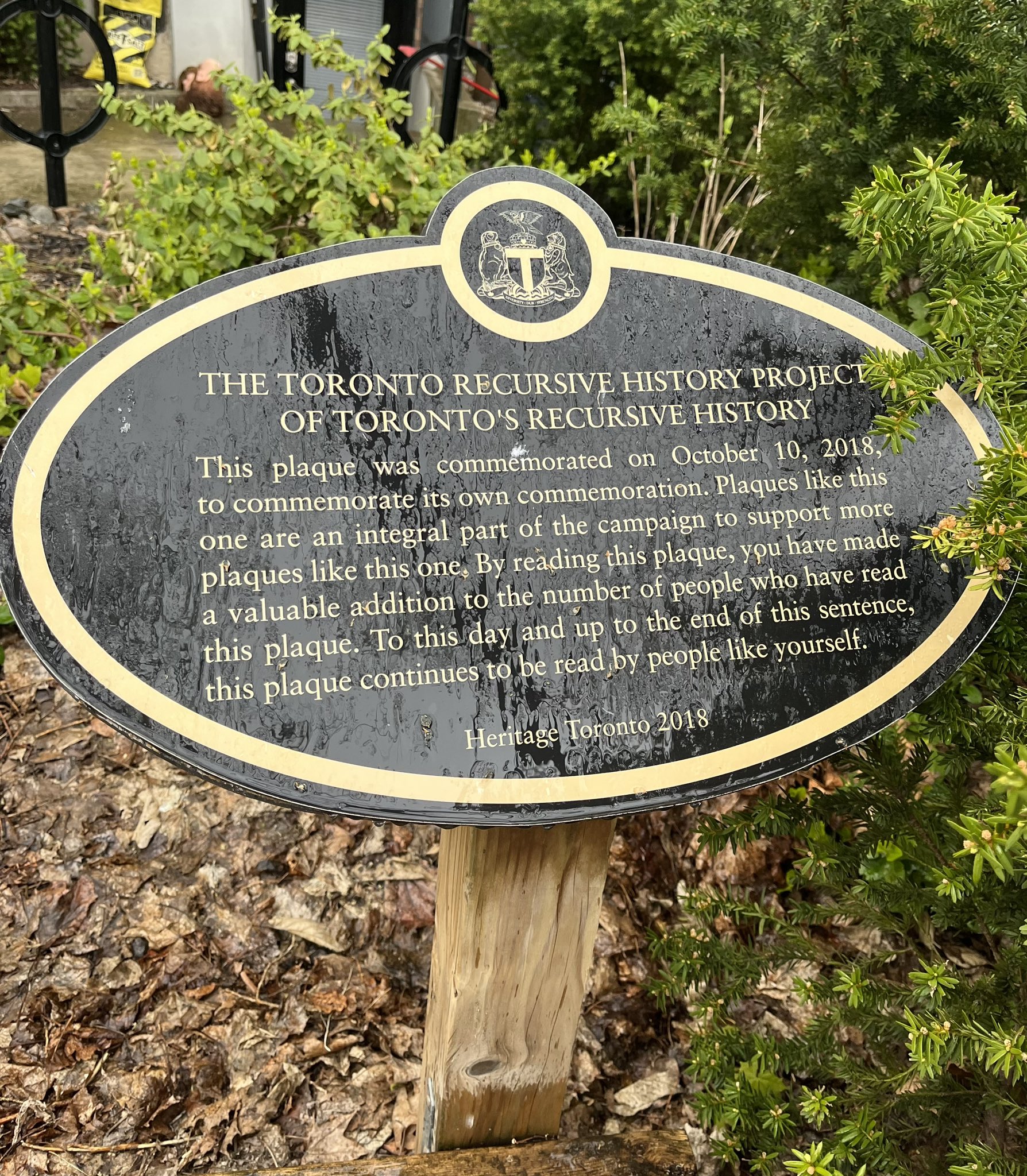
Recursive History


Tuesday, April 25, 2023

Take A Chance

It has been years since I put up an ABBA video.  Those used to be standard here.  They came out just as I was getting away from popular music and I didn't like them.  Made fun of them.  Came to like them.


Flamingoes were big around here in the early years, especially the authentic Don Featherstone type. Meerkats figured prominently for a few years as comic relief. I started as a psychblogger, and put out my Underground DSM right from the beginning. You pick up things that aren't in the textbooks if you just pay attention. I also carried news from Romania fairly often, but even I'm not interested in it anymore.

Memory and Trauma

I will give a description that is only partly accurate but I think helps separate concepts pretty well. It is some cross between an analogy of what is happening in memory and what is physically happening. Imagine that emotional memory and event memory are completely separate and independent. You can think of it as video and audio for a film, or text and illustration in a book. They can be related, and mostly are related, but they don't have to be. They are stored in different parts of the brain, though often with plenty of overlap. Yet what if the audio was noise? The sound of a car crash when the guy kisses the girl in a movie? How would that get stored?  How would the brain put that together?

It might not put it together, which is part of why traumatic memories are unreliable, even when they are about indisputably real things.

Years ago I went out in my slippers in winter to the head of the driveway to adjust the trash barrels for pickup. I slipped and slammed my foot against a big chunk of ice, pulling the big toenail mostly off. I still wince from my right big toe all the way up my leg and even up my spine when I think of it.  Small wonder, as it has never been quite right ever since. That toenail came mostly off and a new one grew in - sort of. That eventually grew out and another came in, looking very strange. This is the sixth toenail now, and it looks almost normal. But you can see how that wincing is a sort of mild PTSD, and a person who had been beaten as a child or suffered repeated injury could find themselves wincing frequently, enough to start interfering with functioning. 

So now I will mention. It's actually the left big toe that was injured.  There's no question of that, you can look at the toenail and see, even years later, that it's not right. Yet when I think of the incident, my brain tells me it was the right toe that was injured. Somehow the message got scrambled and stored improperly. Trauma does that.  It's not linear.

Worse, when trauma has scrambled lots of your memories, you can get triggered - those are quite real - and be delivered into an inaccurate memory because it looked a lot like a previous one and your brain has traveled that route umpteen times.  There are ruts in that road, your pickup just goes there more easily.  It would take a conscious effort to override the ruts. 

This has been an enormous problem in trying to prosecute child abusers and molesters. The memories of the victims are unreliable and thus weakened in court. Sometimes there are childhood ER records or photos someone took or other witnesses, but other times - the child, now grown, can be made to look like a liar, or at least inaccurate, on the witness stand.  The perp goes free. Intense memory being what it is, it's doubly infuriating for the victim, who has vivid memories of the event and sometimes will not help the prosecution because they refuse to back down from what they are absolutely sure is true. 

There is a subtler way that memory can go wrong. I have mentioned before, and it is becoming more widely known, that even though those of us who grew up with movies and TV automatically think of our memories as something like a film record, they are actually more like a computer (or graphing calculator) that reconstructs the memory from scratch each time, based on the previous times we have remembered it, especially the most recent. When we are done thinking about it we put it back in storage, where it lies unchanged.  But while it is out and active, all bets are off. Things can get added in, things can drop out. Sometimes this is rather random, not according to any narrative direction from other parts of the brain. But for important memories that keep getting brought back, they get gradually adjusted to fit the story.  The story can be very general: my sisters have always betrayed me. Or Men in STEM think women aren't quite as good. Narratives like that can have good supporting evidence. Contrary evidence might be acknowledged at first, especially if someone draws attention to it. Well, Meg did help you pay for a lawyer. Or But your first academic advisor said you were the best student he'd ever had. Yet without that help, there is not even any need for you to actively suppress the contrary information.  You'll just do it naturally. 

Consider, for example, when you get angry at someone and start rehearsing what trespasses they have trespassed against you. If you don't watch yourself - if you don't take active steps to try and make sure you have got the story right - you will have already shuffled the list of what they have actually done within a half hour, never mind a decade. Every incident you remember, at least at first, will be true. Nobody has to suggest a false memory to you. (Though if they do you might be too easily primed for it.) 

You may remember exercises they gave in psychology or sociology classes, in which people are described, but slightly differently to everyone, then they decide who is going to get to stay on the island. The black drug addict turns out to be a doctor addicted to pain medication but sober the last two years. The unmarried mother of three turns out to be the widow of a police officer killed in the line of duty.  It's supposed to show us all how ignorant and prejudiced we are. But it is valuable in showing that we really do see things differently when key bits of information are missing. 

So when you and your sister remember borrowing each other's clothes without permission, and she remembers (correctly) that you did that a lot more often, while you remember (correctly) that she once damaged an expensive sweater of yours and never replaced it, and neither of you remember your own fault, it's going to look different fast.

False memories?  Well, you've been unhappy for the last year and don't know why.  A therapist makes a guess and suggests that you seem like other patients she has had who were molested. Huh. Maybe that's it. I mean, that would explain... and you are off and running. It does seem dreadfully unfair that victims who desperately need justice can get it. Yet when you recall that in almost no times and places in history have victims ever had much recourse, you can see why memory is not much advantage. Remember that you shouldn't get yourself into situations like X.  Remember that those guys are violent. It's better to forget the details. Son #3, the older Romanian, has been actually comical in what he has forgotten about his traumatic past. In his first year in America he was in one of those youth group exercises about privilege. If someone made your dinner for you last night, take one step forward.  If you live with both your parents at the same time, take two steps forward. He was near the front of the room! His new brother was actually a few steps in back of him! Then he laughed. "Oh, you mean ever in my life! I belong way back there!" and he went there laughing.The other Romanian called him a few months ago to let him know their aunt in Oradea had died. "Wait. We had an aunt in Romania?" His mother's sister, who brought up his sister. Forgotten.

I used to tell patients in the 1980s - and it was unpopular I got in minor trouble a couple of times - "If you were lucky enough to forget it the first time, don't go looking for it now."  Exploratory therapy, which used to be the norm, is potentially catastrophic.

Monday, April 24, 2023

Ghost Riders In The Sky

A fine, ethereal quality to the chorus that I think works better than other interpretaions


Sex and the iWorld

Almost fifteen years ago now my friend Dale Kuehne, a poli-sci professor at St Anselm College published a book Sex and the iWorld: Rethinking Relationship Beyond an Age of Individualism. I mentioned it at the time and have linked to it occasionally since. It includes points that would likely not be regarded as trans-friendly, I recall, and indeed it is a central point that never before have individuals had such a radical ability to define their sexuality without reference to some larger community:* Family, village, neighborhood, church, or less concrete ideas like culture or tradition or reason. 

This morning I was notified that an old post from 2010, part of my series describing the adoption of the boys from Romania, start to finish, had been flagged and removed, with the explanation given that it violated policies about malware and viruses. I looked at the comments - no spam.  I looked at my own HTML and saw nothing that could lead one to dangerous sites. I did see the footnote referring to Dale, who was on one of my wife's Romania trips, and his book. I wondered it that was the real problem and removed the reference and submitted it.  It was instantly reinstated.

I didn't run the experiment properly.  I might have been able to be reinstated anyway, perhaps by changing a letter "to show that I had addressed the problem." I doubt I will know now. But it is suggestive, isn't it.  The two main things that seem to be flagged are trans/queer issues (less often gay or lesbian, or maybe even not at all), and posts or groups that are speaking directly against the power and legitimacy of the various federal governments, rather than radical or forbidden ideas about any specific policies or government actions. Nor do those seem to be thoroughgoing, scorched-earth eliminations of such things.  Just one more inconvenience for a small blogger from NH.

So perhaps this is how it will be. It's easier just to leave it that way and move on. But fast-forward ten years, and is Dale made that much more invisible on a long quiet road? His book is still available, after all.  He hasn't been fired. This may be more of that ninja censorship I just read about and linked to. Or maybe I'm just being crazy and overreactive, making myself paranoid for no reason. That could also be a ninja strategy, though, making me question my own reasoning and asking myself if the problem is mine. "Live Not By Lies" is important, but what if the lies are my own?

So I decided to double-down and feature the book again. Next I'll go back and link to the book again in the original post. We'll see.

Sunday, April 23, 2023

What Did You Do? Part 3

I should be careful not to give the impression that my memory is nearly flawless. I have some spectacular individual failures, and in general am not even in the same league with my wife in terms of the people who come to visit at church - or even have been there a few years - and their children, illnesses, and prayer requests. I should remember but I don't.  I remember my third-grade class much better.

But certain types of memory served me well at work.  When You are dialing the same 20 phone numbers and 20 fax numbers for 20 years I just don't understand why you don't just memorise them.  But people liked writing them on a list or putting them on speed dial.  I got so I just knew most of the zip codes in NH.  It just saves a minute over and over again through the week. There were plenty of other numbers, including repeat patient's medical record numbers , dates of admission, and dates of birth. Similarly, I wouldn't remember patients so much by their history or their appearance, but by their addresses. Agency addresses were also useful, as we had to mail things out or record appointments on discharge paperwork. That's more than a little weird, but it worked a treat. Diagnostic codes, standard medications dosages, and the names and phone numbers of current caseload family members, bosses, or landlords were used all the time.  When you work in a hospital, there's just acres of stuff it's easier to just know than to keep looking up. To me that's not using brain space but saving it, because it was mostly automatic.

A few times it was useful to remember place of birth and parent's names when someone had tried to take on a new identity.

Yet that is mostly just a curiosity. The real use of memory was in patient history, and because I would have the historical chart, I got to check my accuracy constantly. Yep. Married to Marjorie 1974-82, we had her as a patient twice as well, once during the marriage and once much later. It wasn't only shortcut for getting up to speed, it was also a very quick check on who was trying to fool us and who was being honest but just unreliable. Sometimes we would have a sibling who didn't know their older sister had been at our hospital, giving us a different perspective on the family of origin. It teaches you something, especially when the information is quite different and you have to sort out whether it is error or deception or both.  I would have constant recheck because of the physical record, kept for years until it was all "simplified" around 2010, with only selected documents kept.  There were others as good as I was on this score, and it was good to become aware of the type of thing I would get wrong.  I would tend to shorten time, thinking we had had a patient at our hospital five years ago when it was actually nine.  Sometimes worse. I would remember legal charges precisely, but be wildly off on sentences. 

I mentioned previously that when I see old friends they get a kick out of what I remember: You went to nationals in fencing senior year and hoped you might finish in the top three.  But you partied and were hung over and finished sixth. (If that sounds like I'm kicking my friend for screwing up, rest assured he was tickled that I remembered that he fenced at all, and certainly that he went to nationals. We had hundreds of lab theater and acting class plays over my four years, and I remembered a lot of who played what roles.

If this seems like bragging, understand that it is more like being defensive.  I have had a couple of serious differences in the last few years, and it would be a legitimate challenge: Everyone's memory changes things a bit, why should I believe that yours is more accurate? Very occasionally I have some sort of written corroboration but usually it could just be a standoff. I told my granddaughter about the email exchange with an ex-GF who said we had "just drifted apart" but I recalled a moderately dramatic set of events. She got a kick out of that, as I hoped a fifteen-year-old would. As I have mentioned, I do know a few who are as good as I am or better, and I love to have them around. Iron sharpens iron and all that. Sometimes one new fact will open up whole avenues of memory, as it explains things that had been puzzling and just hanging out in the wind.

It should be fun going forward.  I just got Daniel Schacter's Seven Sins of Memory for my birthday (oh right.  I also remember birthdays, though that is uneven.) I may be about to find out that my understanding of memory is flat wrong.  We'll see.

Censorship

 "...As I've written elsewhere, the the right-wing are censorship vikings and the left wing are censorship ninjas." Author Sherman Alexie. That seems very much like what I have seen in nearly fifty years of being a librarian's husband (both city and school).

The full quote:

My YA novel The Absolutely True Diary of a Part-Time Indian is one of the most challenged and banned books of the last 20 years. According to the American Library Association, my book was the most banned and challenged book in the United States 2010-2019. (AVI note.  It has a paragraph about masturbation in it, which seems to be the main trouble.) So I have more personal experience with the right-wing's vilification of books and writers than just about everybody.  But I'm also highly aware of the way the left censors and silences writers.  And a lot of this silencing and censoring happens before a book is even published, with sensitivity readers who demand changes based on ever-shifting moral standards and definitions of "triggers" and, more dangerously, by creating an environment where writers silence and censor themselves because they fear professional and personal excommunication. As I've written elsewhere, the right wing are censorship vikings and the left wing are censorship ninjas.